




What's Happening?
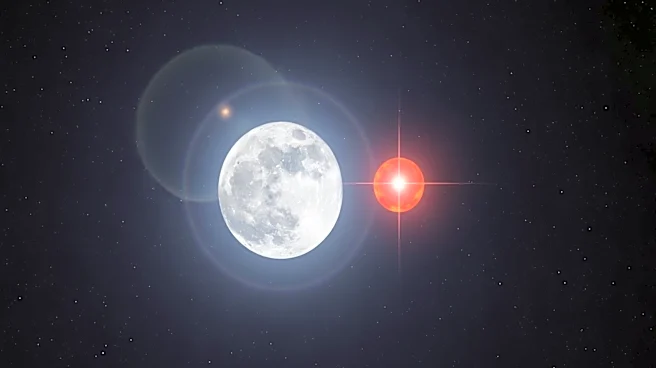
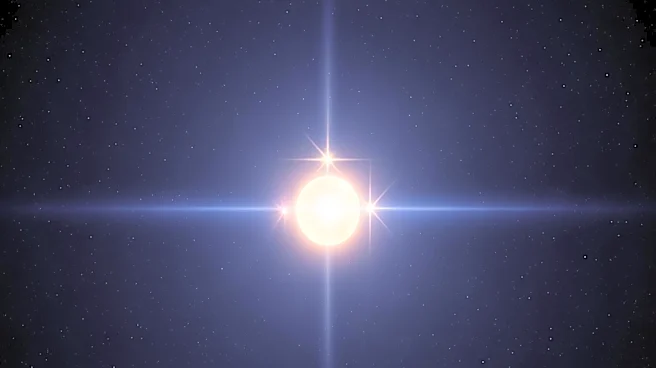
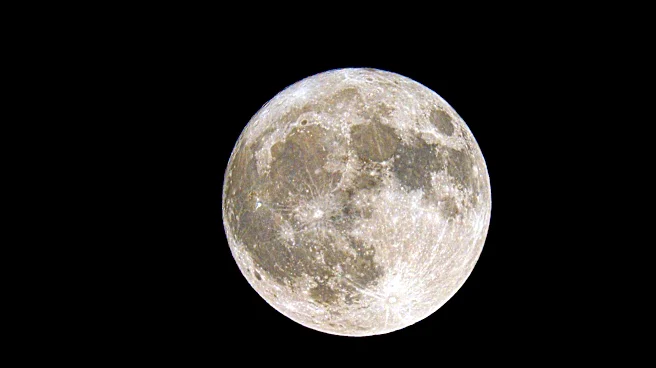
On the evening of May 3, 2026, the Moon will rise near the bright star Antares in the constellation Scorpius. This celestial event will be visible to observers in the United States, where the Moon will pass 0.5° south of Antares at 11 P.M. EDT. While
some regions in the Southern Hemisphere will experience an occultation, where the Moon passes directly in front of Antares, viewers in the U.S. will see the two celestial bodies close together in the sky. The Moon, still 95% illuminated, will not overshadow Antares, which shines brightly at magnitude 1.1. As the night progresses, the Moon will appear to move eastward, creating a dynamic display for skywatchers.
Why It's Important?
This event is significant for astronomy enthusiasts and casual observers alike, offering a chance to witness a close conjunction of the Moon and a prominent star. Such events highlight the dynamic nature of the night sky and provide educational opportunities to learn about celestial mechanics. The visibility of Antares, despite the Moon's brightness, underscores the star's prominence and offers a visual treat. This conjunction also serves as a reminder of the predictable patterns of celestial bodies, which have been observed and recorded for centuries, contributing to our understanding of the universe.
What's Next?
Following this event, skywatchers can look forward to other celestial phenomena throughout May 2026, including the visibility of Venus and Jupiter, and the improving visibility of Comet Tempel 2. These events provide ongoing opportunities for observation and engagement with the night sky. Astronomy clubs and observatories may organize viewing events to capitalize on public interest, fostering a greater appreciation for astronomy.