
What's Happening?
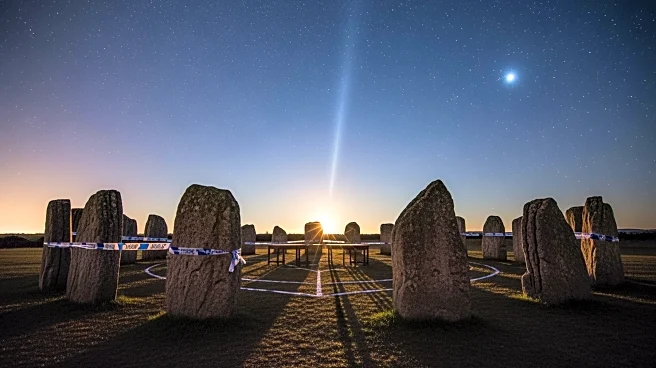
The Geminid meteor shower, known for its bright and colorful meteors, is expected to peak on the night of December 13-14, 2025. However, skywatchers in Bucks County, Pennsylvania, may face challenges due
to predicted weather conditions. The National Weather Service in Mount Holly, New Jersey, forecasts 1 to 3 inches of snow and heavy cloud cover, which could obscure the view of the meteor shower. The Geminids, active since December 4, are anticipated to provide a spectacular display of shooting stars and fireballs, but the weather may dampen the experience for local observers. The meteor shower is named after the constellation Gemini, from which the meteors appear to radiate.
Why It's Important?
The Geminid meteor shower is one of the most anticipated celestial events of the year, attracting both amateur and professional astronomers. Its potential obstruction by weather conditions in Bucks County highlights the challenges faced by skywatchers who rely on clear skies for optimal viewing. The event's significance extends beyond entertainment, as it offers educational opportunities about astronomy and the solar system. The Geminids are unique because they originate from an asteroid, 3200 Phaethon, rather than a comet, providing insights into different types of celestial bodies and their interactions with Earth.
What's Next?
Following the peak of the Geminid meteor shower, the Ursids meteor shower is set to begin on December 17, 2025. Skywatchers in Bucks County and other regions will have another opportunity to observe meteors, provided weather conditions improve. The ongoing interest in meteor showers may encourage local astronomy clubs and educational institutions to organize viewing events and discussions, fostering community engagement and interest in space science. Additionally, advancements in technology may offer alternative ways to experience these celestial events, such as live-streaming from locations with clearer skies.