











What's Happening?
A major water main break occurred in West Hollywood early Thursday morning, leading to widespread flooding and significant disruptions. The Los Angeles Department of Water and Power (LADWP) reported that the break happened near Palm Avenue and Harratt
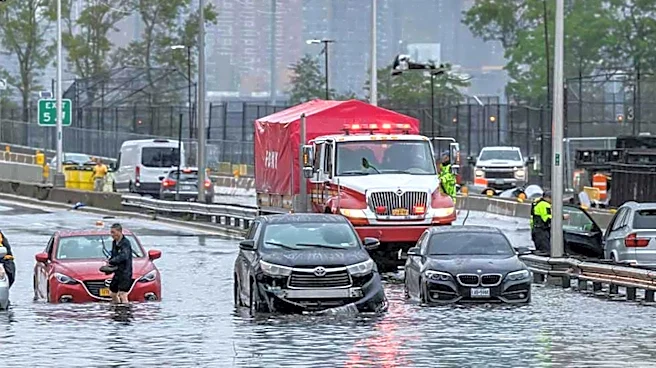
Street around 2:30 a.m. The rupture involved a 36-inch steel main, which caused water to rush down the streets for several hours before it was shut off. The flooding resulted in a sinkhole on Holloway Drive and Palm Avenue, and several vehicles in underground parking garages were submerged. Crews from LADWP responded quickly to assess and manage the situation, working to shut down the trunk line and two large valves to prevent further damage. Despite the flooding, clean and safe water continued to be distributed to residents. The incident led to road closures and traffic advisories, with local officials urging residents to use alternate routes.
Why It's Important?
The water main break in West Hollywood highlights the challenges of maintaining aging infrastructure in urban areas. The 36-inch steel pipe involved in the rupture was installed in 1916, indicating the potential for similar incidents as infrastructure reaches the end of its useful life. The flooding caused significant damage to vehicles and property, disrupting daily life and necessitating emergency responses. This event underscores the importance of proactive infrastructure maintenance and upgrades to prevent such occurrences. The incident also serves as a reminder of the need for effective emergency response systems to manage urban flooding and minimize damage.
What's Next?
LADWP crews are expected to continue working on repairs and assessing the full extent of the damage. The local government may face pressure to accelerate infrastructure upgrades to prevent future incidents. Residents and businesses affected by the flooding will likely seek compensation for damages, and LADWP has stationed claims staff in the area to assist with inquiries. The incident may prompt discussions on infrastructure investment and emergency preparedness in urban areas, particularly in regions with aging water systems.