

What's Happening?
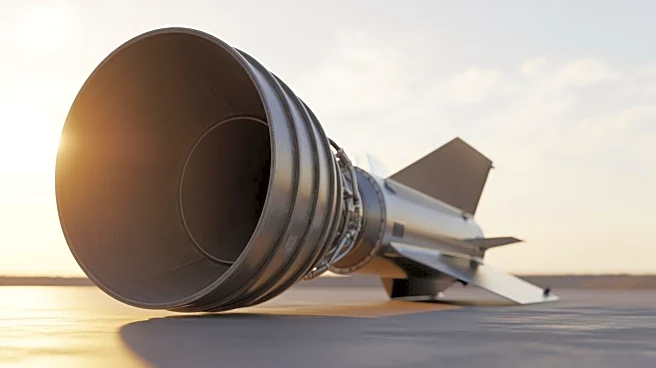
On January 13, 1920, The New York Times published an editorial expressing skepticism about Robert Goddard's theories of rocket-powered spaceflight, describing them as a 'severe strain on credulity.' Despite this skepticism, Goddard continued his pioneering
work in rocketry, leading to the successful launch of the first liquid-fueled rocket in 1926. His contributions laid the foundation for modern space exploration, and he is now recognized as the 'Father of Modern Rocketry.' In 1959, NASA honored his legacy by naming the Goddard Space Flight Center after him.
Why It's Important?
The initial skepticism faced by Robert Goddard underscores the challenges innovators often encounter when proposing groundbreaking ideas. Goddard's perseverance and eventual success highlight the importance of visionary thinking and resilience in advancing scientific and technological frontiers. His work not only paved the way for space exploration but also demonstrated the potential of rocket technology for various applications, including military and commercial uses. The recognition of Goddard's contributions by NASA and the broader scientific community reflects the long-term impact of his work on space exploration and technology development.
Beyond the Headlines
The story of Robert Goddard and the New York Times' editorial serves as a reminder of the role media and public perception play in shaping the trajectory of scientific innovation. It also highlights the importance of supporting scientific research and exploration, even when initial ideas seem improbable. Goddard's legacy continues to inspire future generations of scientists and engineers, emphasizing the value of curiosity, experimentation, and the pursuit of knowledge. The evolution of public and institutional support for space exploration since Goddard's time illustrates the dynamic relationship between science, society, and technological progress.