







What's Happening?
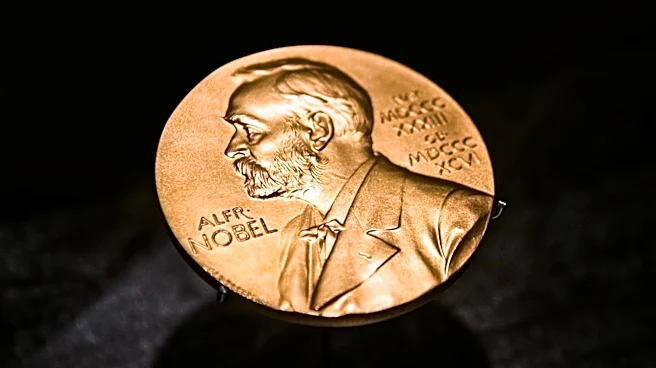
William D. Nordhaus, a Yale economist and Nobel laureate known for his pioneering work in integrating climate change into long-run macroeconomic analysis, passed away at the age of 85. Nordhaus, who shared the Nobel Prize in economics in 2018 with Paul
Romer, dedicated his career to understanding the economic implications of climate change. He developed the Dynamic Integrated Climate-Economy (DICE) model, which connects economic growth, carbon emissions, and global temperatures, allowing policymakers to assess the costs of climate damage against the expenses of reducing emissions. His research provided the economic framework for carbon pricing, advocating for polluters to bear the financial burden of environmental damage. Nordhaus served on President Jimmy Carter’s Council of Economic Advisers and was a long-time faculty member at Yale, where he also served as provost. He co-authored Paul Samuelson’s classic textbook, 'Economics,' through its 19th edition.
Why It's Important?
Nordhaus's contributions are profoundly important for U.S. and global economic policy, particularly concerning climate change. His DICE model provided a quantifiable method for governments and industries to evaluate the economic trade-offs of climate action, influencing discussions around carbon taxes and emissions regulations. His advocacy for carbon pricing aimed to internalize the external costs of pollution, encouraging a shift towards more sustainable economic practices. This work has direct implications for U.S. industries, especially those heavily reliant on fossil fuels, as it underscores the economic rationale for transitioning to cleaner energy sources. Furthermore, his concept of a 'climate club,' where countries agree on a carbon price and impose tariffs on non-participating nations, offers a potential framework for international climate cooperation, which could significantly impact U.S. trade relations and environmental diplomacy. His research also highlighted that the majority of benefits from technological advancements are passed on to consumers, a finding that shapes understanding of innovation's economic impact.
What's Next?
The legacy of William Nordhaus will continue to influence climate policy and economic research. His models and theories are likely to remain central to discussions on carbon pricing mechanisms, both domestically and internationally. Policymakers in the U.S. and abroad will continue to grapple with the optimal carbon tax levels and the implementation of international agreements, such as carbon border adjustment mechanisms, which echo Nordhaus's 'climate club' idea. Academic institutions and research bodies will likely further develop and refine his models, adapting them to new data and evolving climate science. The ongoing debate about the economic costs and benefits of climate action will undoubtedly reference Nordhaus's foundational work, ensuring his ideas remain relevant in shaping future environmental and economic strategies.
Beyond the Headlines
Nordhaus's work extends beyond mere economic calculations; it delves into the ethical and societal responsibility of addressing climate change. By putting a price on carbon, he challenged the notion that environmental degradation is an external cost to be borne by society at large, instead advocating for accountability from polluters. This approach raises fundamental questions about intergenerational equity and the moral obligations of current generations to future ones. His efforts to make an economics textbook freely available to learners also highlight a commitment to broader education and accessibility of knowledge, reflecting a belief in the power of informed public discourse to drive change. His career exemplifies the critical role that academic research can play in shaping public policy and fostering a more sustainable future.