





What's Happening?
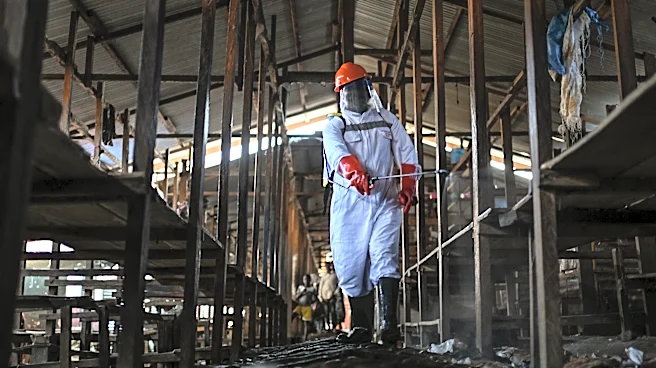
In the Democratic Republic of Congo, health workers are struggling to contain an Ebola outbreak that has resulted in over 900 suspected cases and 119 deaths, primarily in the Ituri Province. The outbreak, declared on May 15, 2026, is complicated by ongoing
violence from armed groups and a lack of resources due to international aid cuts. The Bundibugyo strain of the Ebola virus, which lacks an approved vaccine, is responsible for the outbreak. The situation is exacerbated by distrust in local communities and poor infrastructure, making it difficult for health responders to operate effectively.
Why It's Important?
The outbreak poses a significant threat not only to Congo but also to neighboring countries like Uganda, which has reported five confirmed cases. The potential for the virus to spread across borders is high, raising concerns for international health security. The situation highlights the critical need for increased funding and resources to manage the outbreak effectively. The ongoing conflict and lack of trust in health interventions further complicate efforts to control the disease, potentially leading to a wider regional health crisis.
What's Next?
Efforts to contain the outbreak will require substantial international support and cooperation. The Congolese government and aid organizations are working to establish treatment centers and improve community engagement to build trust. However, the presence of armed groups and the challenging terrain will continue to hinder these efforts. Neighboring countries are on high alert, with Uganda implementing travel restrictions to prevent further spread. The international community may need to reassess aid strategies to ensure effective disease management in conflict zones.
Beyond the Headlines
The outbreak underscores the intersection of health crises and geopolitical instability. The lack of infrastructure and ongoing violence in eastern Congo highlight the broader challenges of delivering healthcare in conflict-affected regions. The situation also raises ethical questions about the responsibility of the international community to support vulnerable populations facing compounded crises of health and security.