

What's Happening?
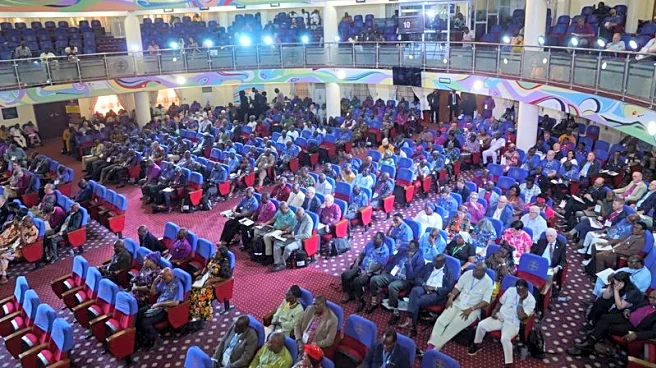
At the Wakati Wetu festival in Nairobi, artists and writers gathered to discuss the role of arts in advancing reparative justice for colonial crimes. The event coincides with the African Union's recent motion to label slavery and colonialism as crimes against
humanity, which will be presented at the United Nations. The AU has declared 2025 as the year of reparations, extending the timeline to 2036 to mobilize support for justice.
Why It's Important?
The push for reparative justice in Africa addresses historical injustices and their lasting impacts on the continent. By incorporating arts and culture, the movement aims to make discussions more accessible and engage a broader audience. This initiative reflects a growing recognition of the need for redress and reconciliation, which could influence international relations and policies regarding historical accountability.
What's Next?
The motion at the United Nations could lead to increased international dialogue on reparations and historical justice. African countries may continue to use cultural events to raise awareness and build momentum for the reparative justice movement. The outcome of these efforts could impact diplomatic relations and potentially lead to formal reparations or acknowledgments from former colonial powers.
Beyond the Headlines
The use of arts and culture in the reparative justice movement highlights the power of creative expression in addressing complex social issues. It underscores the potential for cultural diplomacy to foster understanding and healing. The movement also raises questions about the role of international institutions in facilitating justice and the challenges of achieving consensus on historical accountability.