





What's Happening?
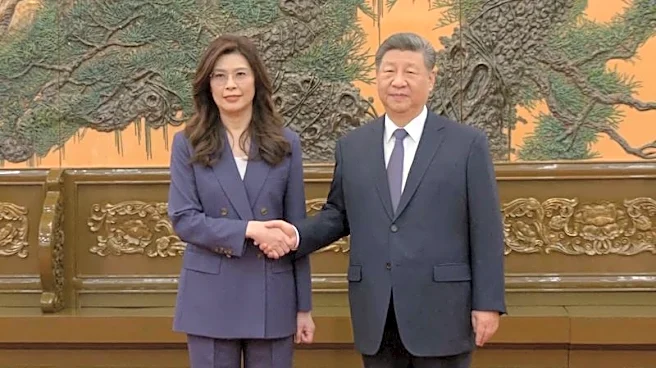
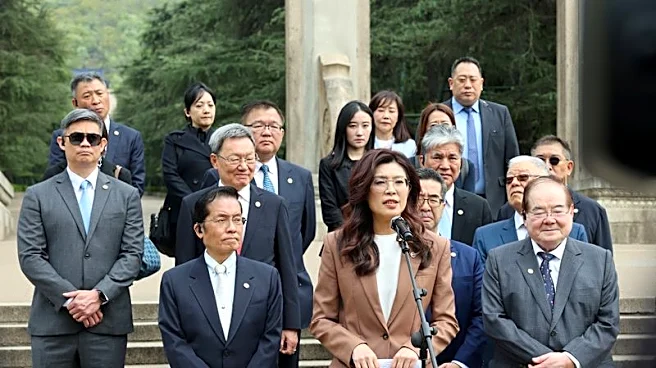
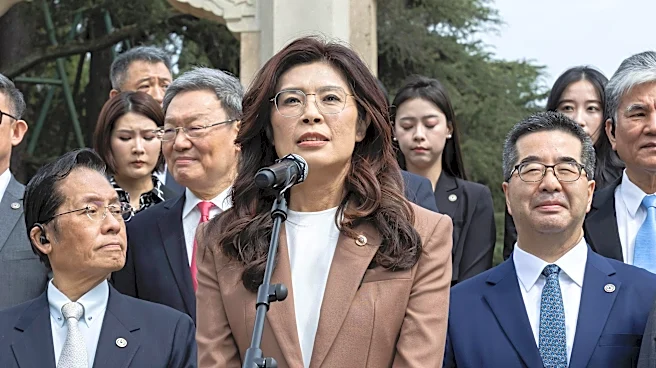
China announced it will resume certain ties with Taiwan, including direct flights and imports of Taiwanese aquaculture products, following a visit by Cheng Li-wun, the leader of Taiwan's opposition Kuomintang (KMT) party. The Taiwan Work Office under
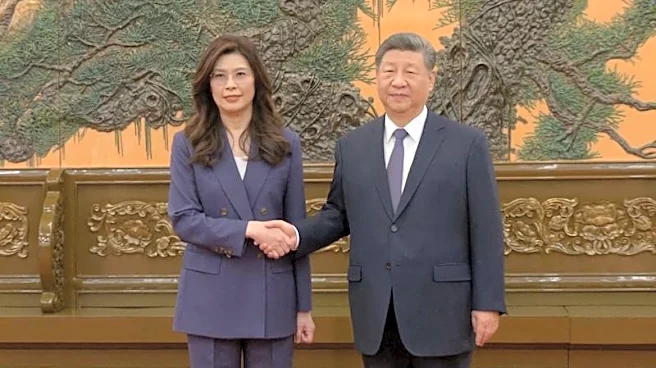
China's Communist Party stated it would explore establishing a communication mechanism between the Communist Party and the KMT. This move comes after a meeting between Cheng and Chinese President Xi Jinping, where they called for peace. However, Taiwan's Mainland Affairs Council criticized the measures as 'political transactions' that bypass the Taiwanese government. Relations between China and Taiwan have been strained since the election of pro-independence President Tsai Ing-wen in 2016, with China cutting off most official dialogue and increasing military presence near Taiwan.
Why It's Important?
The resumption of ties between China and Taiwan could have significant implications for cross-strait relations, potentially easing tensions that have been high since 2016. The move may also impact Taiwan's political landscape, as it highlights the KMT's approach to engaging with China, contrasting with the current government's stance. Economically, the resumption of imports could benefit Taiwanese industries affected by previous bans. However, the Taiwanese government's response indicates potential domestic political challenges, as it emphasizes the need for government-to-government negotiations to protect national interests. The development could influence regional stability and U.S. foreign policy, given the strategic importance of Taiwan in the Asia-Pacific region.
What's Next?
The implementation of these resumed ties remains uncertain, as it requires cooperation from the Taiwanese government. Future interactions between the KMT and the Communist Party may further shape cross-strait relations. The Taiwanese government's reaction and potential public response will be crucial in determining the political impact of these developments. Additionally, international stakeholders, including the U.S., may respond to these changes, given their interest in maintaining stability in the region.