





What's Happening?
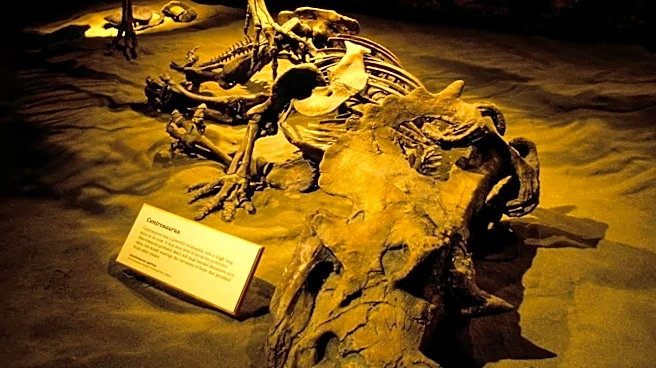
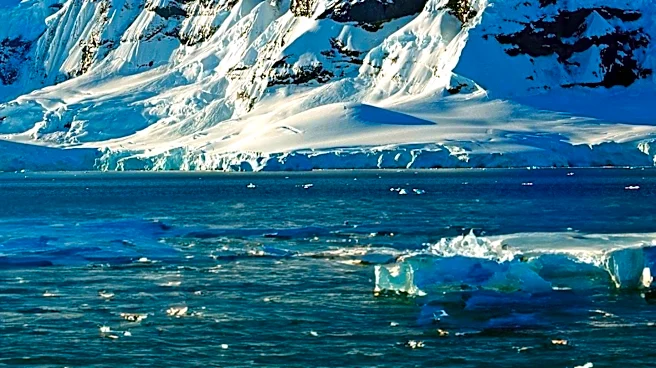
A fossil that had been stored in a drawer for decades has been identified as the first dinosaur bone ever discovered in Antarctica. Initially found in 1985 by geologist Mike Thomson during a British Antarctic Survey expedition to James Ross Island, the fossil was
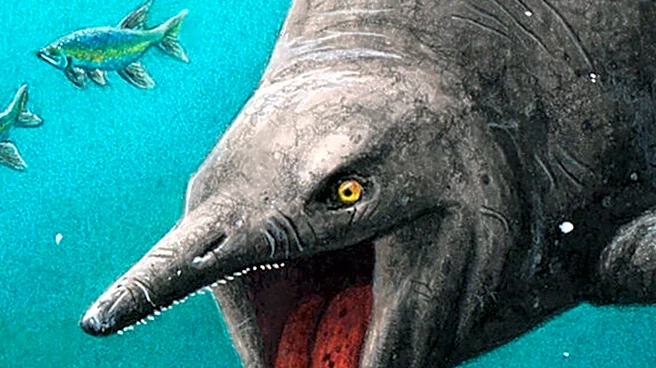
initially thought to belong to a large marine reptile. It was only recently, when paleontologist Mark Evans examined the fossil, that it was determined to be a vertebra from a titanosaur, a type of long-necked herbivorous dinosaur. This discovery sheds new light on the prehistoric life that once existed in Antarctica, suggesting that the region was once home to lush forests and large herbivores.
Why It's Important?
The identification of the first dinosaur bone in Antarctica is significant as it provides crucial evidence of the prehistoric biodiversity of the continent. This discovery suggests that during the Late Cretaceous period, Antarctica was part of the supercontinent Gondwana and was covered in temperate forests, supporting large herbivores like titanosaurs. The find also highlights the potential for more dinosaur fossils to be uncovered as climate change causes ice to retreat, potentially revealing more about the distribution and movement of dinosaurs across southern continents. This underscores the importance of scientific collections and the potential for new discoveries from existing specimens.
What's Next?
As climate change continues to impact Antarctica, the retreat of ice may lead to the discovery of more fossils, providing further insights into the continent's prehistoric life. Researchers may focus on exploring other parts of Antarctica for additional dinosaur remains, which could help piece together the history of dinosaur migration and evolution. The study of this fossil also opens up opportunities for further research into the environmental conditions of ancient Antarctica and how they supported such diverse life forms.
Beyond the Headlines
This discovery not only enhances our understanding of prehistoric life in Antarctica but also emphasizes the enduring value of museum collections. The fossil's identification after decades in storage highlights the potential for significant scientific findings from existing collections. It also raises questions about the impact of climate change on paleontological research, as melting ice may reveal more fossils, altering our understanding of historical biodiversity and continental connections.