


What's Happening?
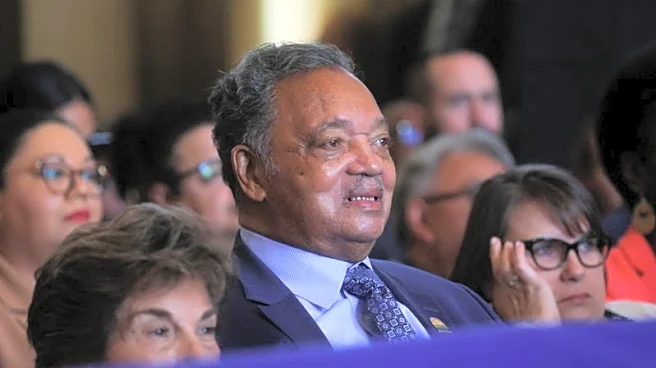
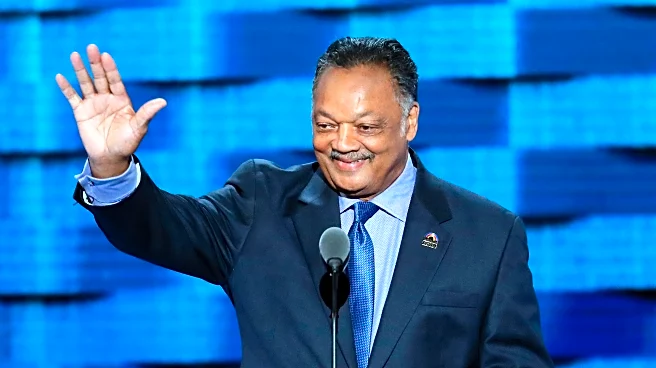
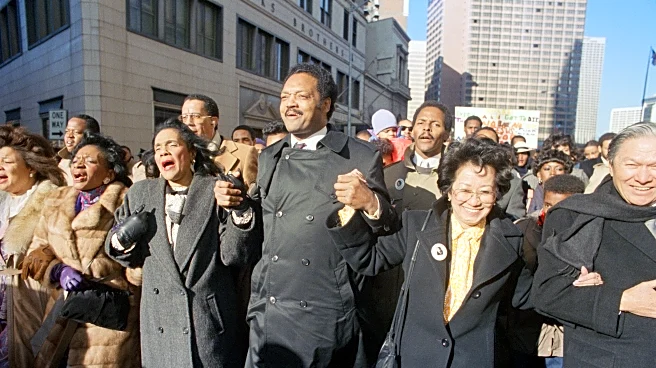
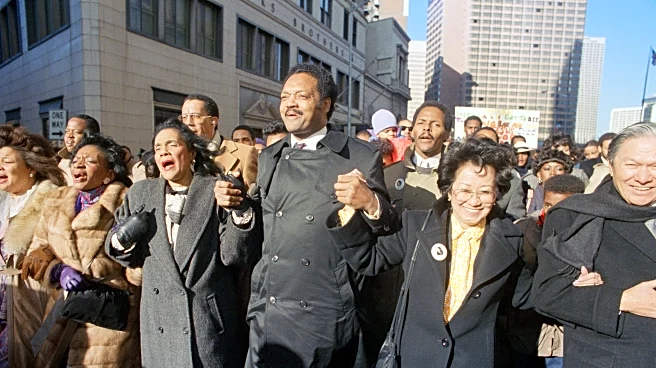
Rev. Jesse Jackson, a towering figure in the civil rights movement, passed away at the age of 84. Known for his advocacy for the poor and marginalized, Jackson's death has prompted an outpouring of tributes from leaders across the nation. He was hospitalized
in November for Progressive Supranuclear Palsy, a rare brain condition. Jackson's legacy includes his work with the Rainbow/PUSH Coalition, his presidential campaigns, and his efforts to promote Black pride and self-determination. Rev. Al Sharpton, a mentee of Jackson, praised him as one of the nation's greatest moral voices. Jackson's influence extended beyond the U.S., impacting global movements for justice and equality.
Why It's Important?
Jesse Jackson's passing marks the end of an era in the civil rights movement. His work has had a profound impact on American society, from advancing voting rights to challenging economic disparities. Jackson's efforts have paved the way for future generations of Black leaders and activists, inspiring them to continue the fight for justice and equality. His legacy is a reminder of the ongoing struggle for civil rights and the importance of maintaining momentum in the face of adversity. Jackson's influence on political and social movements underscores the power of leadership rooted in moral conviction and community engagement.
What's Next?
In the wake of Jackson's death, civil rights leaders and organizations are likely to continue his work, focusing on issues such as voting rights, economic justice, and racial equality. Tributes and memorials will celebrate his life and contributions, while discussions about his legacy may inspire renewed activism and policy initiatives. Political leaders may also use this moment to reflect on the progress made and the challenges that remain in achieving true equality. Jackson's passing may serve as a catalyst for a new generation of leaders to emerge, carrying forward his vision of a more just and equitable society.