



What's Happening?
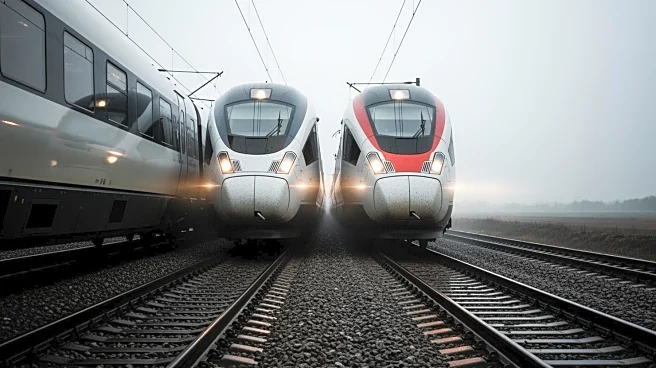
In southern Spain, a high-speed train traveling from Malaga to Madrid derailed near Córdoba, leading to a collision with an oncoming train from Madrid to Huelva. The incident resulted in at least 21 fatalities and numerous injuries. The derailed train,
operated by the private company Iryo, was less than four years old, while the second train was operated by Spain’s public train company Renfe. The collision occurred on a flat stretch of track that had been renovated in May. Emergency services, including local residents, responded to the scene to assist the victims. The cause of the derailment remains unknown, and high-speed rail service between Madrid and Andalusia has been suspended.
Why It's Important?
The collision highlights potential safety concerns within Spain's high-speed rail network, which is a popular mode of transportation. The incident could lead to increased scrutiny of rail safety protocols and infrastructure maintenance. The suspension of services between major cities like Madrid and Andalusia could disrupt travel and economic activities in the region. The tragedy also underscores the importance of emergency preparedness and response in minimizing casualties during such incidents.
What's Next?
An investigation into the cause of the derailment is expected, which could take up to a month. Authorities will likely review safety measures and maintenance records of the rail network. The incident may prompt discussions on improving rail safety standards and emergency response strategies. The outcome of the investigation could influence future policies and regulations governing high-speed rail operations in Spain.