




What's Happening?
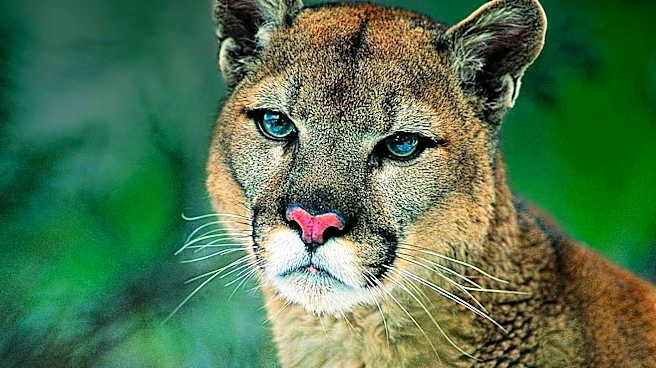
Three uncollared mountain lions were recently observed in Woodland Hills, California, just weeks before the scheduled ribbon-cutting of the Wallis Annenberg wildlife crossing. Security cameras captured one of the big cats strolling down Ganoa Street,
while another was seen about a mile away, and a third large puma appeared near Serrania Park. These sightings are considered a reminder of the unknown population of cougars in the area, beyond well-known individuals like the late P-22. The $114-million wildlife crossing, the largest in the nation, spans 10 lanes over the 101 Freeway in Agoura Hills and was designed to provide safe passage for threatened species, reduce inbreeding, and expand their territory. Some wildlife, including coyotes, have already begun using the crossing.
Why It's Important?
The presence of uncollared mountain lions in residential areas underscores the critical need for wildlife corridors like the Wallis Annenberg crossing. These sightings suggest that the animals' natural habitats are becoming increasingly fragmented, forcing them into closer proximity with human populations. This situation poses potential risks for both humans and wildlife, as mountain lions seek new territories and food sources. The new crossing is vital for the long-term survival of the region's mountain lion population, which faces threats from inbreeding due to isolation and fatalities from vehicle collisions. The fact that these sightings occurred just before the crossing's official opening highlights the urgency of providing safe passage and expanding viable habitats for these apex predators, which play a crucial role in maintaining ecosystem balance.
What's Next?
The Wallis Annenberg wildlife crossing is set for its ribbon-cutting on December 2, marking a significant milestone in conservation efforts. Wildlife experts are hopeful that the recently spotted mountain lions in Woodland Hills could be among the first to utilize this new passage, indicating its immediate impact on their movement patterns. Continued monitoring of the crossing will be essential to assess its effectiveness in facilitating safe wildlife movement and reducing human-wildlife conflicts. The success of this project could serve as a model for future conservation initiatives aimed at protecting fragmented wildlife populations across the U.S. The ongoing presence of uncollared lions also emphasizes the need for continued research and public awareness to understand and coexist with these secretive animals.
Beyond the Headlines
The appearance of uncollared mountain lions in suburban settings touches upon the broader theme of human encroachment on natural habitats and the ethical responsibility to protect biodiversity. These sightings evoke a sense of wonder and connection to nature for some residents, while for others, they may raise concerns about safety. The construction of the wildlife crossing represents a proactive approach to mitigating the consequences of urban sprawl, reflecting a growing understanding of ecological interconnectedness. It also highlights the long-term commitment and significant investment required for large-scale conservation projects. The 'fun and mystery' of these uncollared lions, as described by Paul Edelman, also reminds us of the vast unknown aspects of wildlife behavior and the importance of preserving wild spaces for species that are often unseen but vital to healthy ecosystems.