








What's Happening?
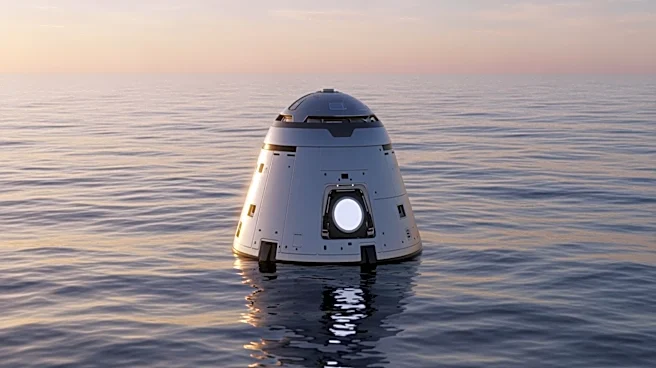
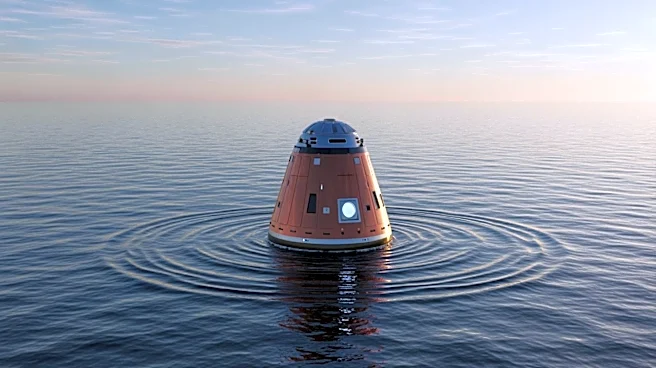
The Artemis 2 mission, part of NASA's Artemis program, has successfully concluded with the splashdown of the Orion spacecraft in the Pacific Ocean. The mission, which lasted 10 days, involved a crew of four astronauts who traveled around the moon. The spacecraft re-entered
Earth's atmosphere at speeds of up to 25,000 mph, generating intense heat. The Orion capsule, named 'Integrity,' was protected by a heat shield and slowed by parachutes before landing in the ocean. The crew was recovered by the USS John P. Murtha.
Why It's Important?
The successful completion of the Artemis 2 mission is a significant achievement for NASA's Artemis program, which aims to return humans to the moon. This mission demonstrated the capabilities of the Orion spacecraft and provided valuable data for future lunar missions. The Artemis program is a key component of NASA's long-term strategy to establish a sustainable human presence on the moon and eventually send astronauts to Mars. The mission's success also highlights the importance of international collaboration in space exploration, as it included a Canadian astronaut.
What's Next?
Following the successful splashdown, the Artemis 2 crew will undergo medical evaluations and debriefings. NASA will analyze the data collected during the mission to prepare for Artemis 3, which aims to land astronauts on the lunar surface. The agency will continue to develop the necessary infrastructure and technology for sustainable lunar exploration. The success of Artemis 2 is expected to bolster support for future missions and encourage further international partnerships in space exploration.