







What's Happening?
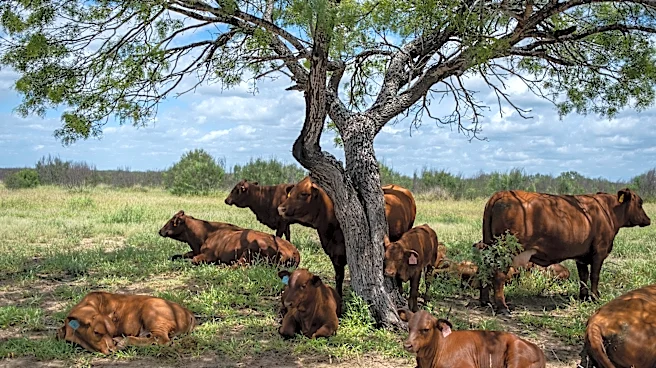
Texas is facing an outbreak of New World screwworm, with 12 confirmed cases affecting livestock such as sheep, cattle, and goats. The outbreak has prompted an escalated response from state and federal agencies, including the activation of the State Emergency
Operations Center. The screwworm, a parasitic fly, lays eggs in open wounds, leading to severe infestations. The U.S. Department of Agriculture and Texas Governor Greg Abbott are coordinating efforts to contain the spread, which poses a significant threat to the cattle industry and could impact beef prices.
Why It's Important?
The outbreak of New World screwworm in Texas is a major concern for the agricultural sector, particularly the cattle industry, which is vital to the state's economy. The infestation could lead to increased costs for ranchers and potentially higher beef prices for consumers. The government's response, including the use of emergency resources and coordination among various agencies, highlights the seriousness of the situation. The outbreak also raises questions about biosecurity measures and the need for ongoing surveillance to prevent future occurrences.
What's Next?
Authorities will continue to monitor the situation closely, with ongoing efforts to eradicate the screwworm and prevent further spread. The use of nitenpyram tablets has been authorized to treat infestations in pets, marking a significant step in containment efforts. The situation may lead to increased scrutiny of border policies and biosecurity measures, as well as potential political debates over responsibility for the outbreak. Ranchers and pet owners are advised to remain vigilant and report any suspected cases to authorities.
Beyond the Headlines
The outbreak has sparked political debate, with some attributing the spread to previous administration policies. This situation underscores the complex interplay between environmental factors, policy decisions, and agricultural practices. It also highlights the importance of maintaining robust biosecurity measures and the potential consequences of policy changes on public health and the economy.