







What's Happening?
In a recent opinion piece, education experts discuss the evolution of math instruction over the past decade and propose changes for the future. The article highlights the shift from focusing solely on content standards to emphasizing the Standards for Mathematical
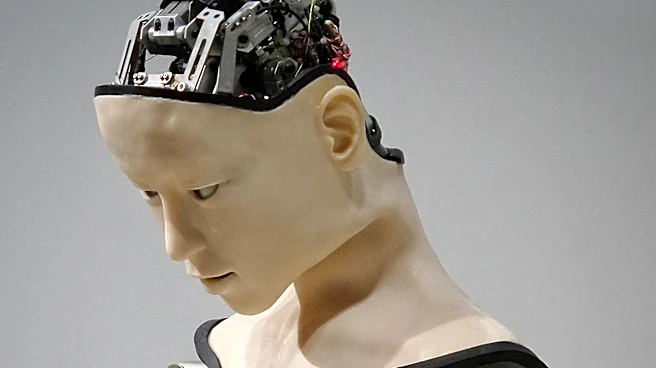
Practice, which aim to improve teaching and learning experiences. The National Council of Teachers of Mathematics has outlined eight key teaching practices to support this shift, including promoting reasoning, problem-solving, and meaningful discourse. The experts argue that these practices have begun to take root, leading to more interactive and student-centered learning environments. They also note the increasing availability of open educational resources and the potential impact of artificial intelligence on math education. The article suggests that future instruction should prioritize critical thinking and problem-solving over procedural fluency, preparing students for a rapidly changing world.
Why It's Important?
The proposed changes in math instruction are significant as they aim to make math education more engaging and accessible to a broader range of students. By focusing on student-centered learning and critical thinking, educators hope to foster a deeper understanding of mathematical concepts, which is crucial in a world where technology can perform routine calculations. This shift could lead to more equitable educational experiences and better prepare students for future challenges. Additionally, the integration of AI and other technologies in education could transform teaching methods, allowing educators to focus on developing students' analytical skills. These changes could have long-term implications for the U.S. education system, potentially influencing curriculum development and teacher training programs.
What's Next?
As the education sector continues to evolve, the implementation of these instructional changes will require ongoing support and adaptation. Teacher education programs may need to adjust their curricula to emphasize the new teaching practices and prepare educators for a more dynamic classroom environment. The role of technology in education will likely expand, necessitating further research and development to effectively integrate AI and other tools into teaching strategies. Stakeholders, including educators, policymakers, and technology developers, will need to collaborate to ensure that these changes are successfully implemented and that students are equipped with the skills needed for the future.
Beyond the Headlines
The shift towards more interactive and student-centered math instruction could have broader cultural and societal implications. By promoting critical thinking and problem-solving skills, education systems may produce graduates who are better equipped to tackle complex global challenges. This approach could also help bridge educational gaps and promote inclusivity, as diverse learning styles and needs are more effectively addressed. Furthermore, the integration of technology in education raises ethical considerations, such as data privacy and the digital divide, which will need to be carefully managed to ensure equitable access to educational resources.