





What's Happening?
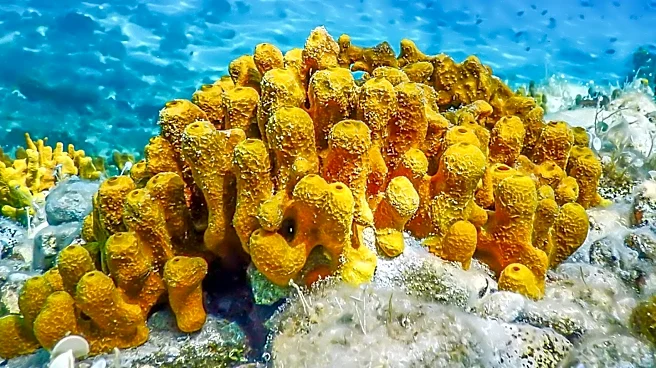
Researchers have identified a Mediterranean sponge species capable of surviving and thriving in degraded harbour environments. The sponge, Chondrosia reniformis, exhibits remarkable biological plasticity, including self-movement and self-cloning, which
could aid in ecological restoration efforts. The study, conducted by the Sponge Ecobiology and Biotechnology research group in Spain, highlights the sponge's role as an ecological engineer, filtering water, removing pollutants, and providing habitat for other marine organisms. This discovery offers a promising approach to restoring biodiversity in heavily altered coastal habitats.
Why It's Important?
The findings are significant as they present a potential solution for restoring degraded marine environments, particularly harbours that have suffered from pollution and habitat destruction. By leveraging the natural capabilities of Chondrosia reniformis, scientists can enhance biodiversity and ecological resilience in these areas. This research underscores the importance of understanding and utilizing natural processes in conservation efforts, offering a sustainable approach to environmental restoration. The study also highlights the broader implications of marine biodiversity and the potential for innovative solutions to address ecological challenges.