
What's Happening?
The United States is focusing on a comprehensive Indo-Pacific strategy aimed at containing China's influence, as tensions in the region escalate. This strategy involves strengthening alliances with key
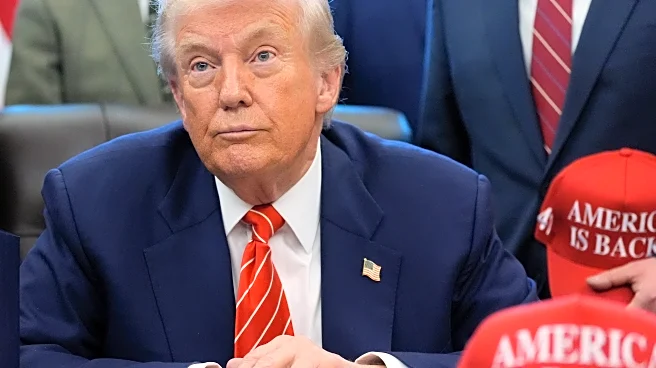
countries such as Japan, South Korea, the Philippines, Australia, and Taiwan. The approach includes enhancing intelligence sharing, expanding joint military exercises, and deepening economic integration with these nations. Recent incidents, such as a Chinese military aircraft targeting Japanese fighter jets, have heightened concerns about China's aggressive posture. Additionally, the Trump administration's decision to allow the sale of advanced AI chips to China has sparked debate over the potential empowerment of Chinese military capabilities.
Why It's Important?
The U.S. strategy to contain China is crucial in maintaining regional stability and preventing the expansion of Chinese influence. By reinforcing alliances and military cooperation, the U.S. aims to deter potential aggression from China, particularly in sensitive areas like Taiwan. The sale of AI chips to China raises concerns about the balance of technological power, as these chips could enhance China's military and surveillance capabilities. The outcome of these strategic decisions will significantly impact U.S. geopolitical standing and its ability to counter China's ambitions in the Indo-Pacific region.
What's Next?
The U.S. is expected to continue its efforts to solidify alliances in the Indo-Pacific, potentially leading to more joint military exercises and economic agreements. The response from China to these measures will be closely monitored, as it could influence future diplomatic and military engagements. The decision to sell AI chips to China may face further scrutiny and could lead to policy adjustments if deemed necessary to protect U.S. interests.