
What's Happening?
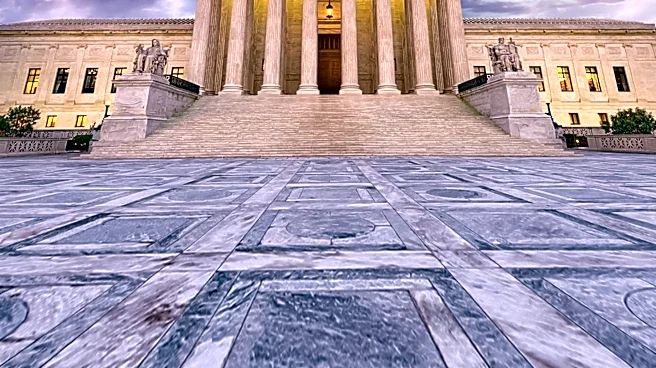
The U.S. Supreme Court has granted the Trump administration's request to continue its policy of deporting individuals to countries other than their home countries, while the justices consider the legality
of the practice. This decision temporarily halts a lower appeals court ruling that had blocked these 'third-country removals.' The Supreme Court will hear oral arguments on the matter in December to determine whether migrants must be given a meaningful opportunity to object before being sent to countries where they have no established ties. The Trump administration has utilized this policy to deport thousands of individuals to various nations, including Mexico, Liberia, and Guyana, asserting it as a crucial tool for removing certain criminal aliens. However, immigrant advocates argue that many of these individuals face significant safety risks, including potential torture or persecution, in these third countries. The Court's order did not provide a specific reason for staying the lower court's injunction, and its three liberal justices expressed dissent.
Why It's Important?
This Supreme Court decision is significant as it allows a key component of the Trump administration's aggressive immigration agenda to proceed, impacting thousands of individuals facing deportation. The policy raises critical questions about due process rights for migrants, particularly their ability to challenge removal to countries where they may face harm. The administration views this policy as essential for national security and efficient removal of individuals with final deportation orders, especially those with criminal convictions or whose home countries refuse repatriation. Conversely, immigrant rights organizations highlight the humanitarian concerns, citing instances where deported individuals have reportedly faced arbitrary detention, abuse, and even torture in countries unfamiliar to them. The outcome of the December arguments will set a precedent for the scope of executive power in immigration enforcement and the protections afforded to non-citizens under U.S. law and international conventions against torture. The case underscores the ongoing tension between national security interests and human rights in immigration policy.
What's Next?
The Supreme Court is scheduled to hear oral arguments on the legality of the third-country deportation policy in December. This hearing will delve into several key questions, including whether lower courts have the jurisdiction to rule on such issues and whether the Trump administration's policy violates due process rights or international conventions against torture. The Court will also consider the Department of Homeland Security's internal guidance regarding these removals. Following the arguments, a definitive ruling is expected sometime next year. Depending on the Court's decision, the Trump administration may either continue or be forced to significantly alter its third-country deportation practices. Stakeholders, including immigrant advocacy groups and government agencies, will closely monitor the proceedings, with potential reactions ranging from further legal challenges to policy adjustments based on the Court's final judgment. The ruling will likely shape future immigration enforcement strategies and the legal framework for migrant protections.
Beyond the Headlines
The ongoing legal battle over third-country deportations highlights deeper ethical and legal implications concerning the U.S. role in international human rights. The policy challenges the principle of non-refoulement, which prohibits returning individuals to countries where they face persecution or torture, a cornerstone of international refugee law. Critics argue that by deporting individuals to countries with which they have no ties, the U.S. may be outsourcing its humanitarian responsibilities and potentially exposing vulnerable populations to unknown dangers. The case also touches upon the balance of power between the executive branch and the judiciary in immigration matters, with the Supreme Court's conservative majority often siding with the administration's broad authority. The long-term societal impact could include a redefinition of due process for non-citizens and a potential shift in how the U.S. engages with international partners on immigration and human rights issues, influencing global norms and practices related to deportation and asylum.