





What's Happening?
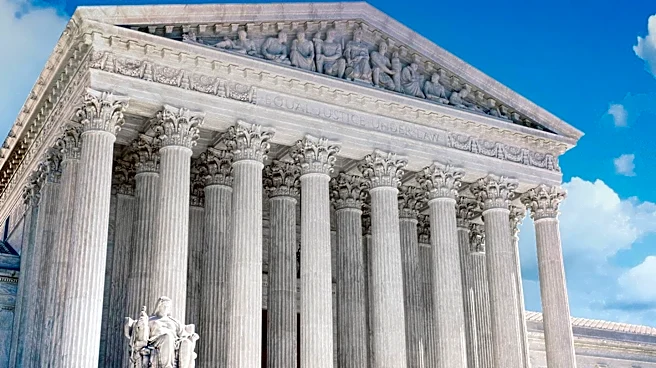
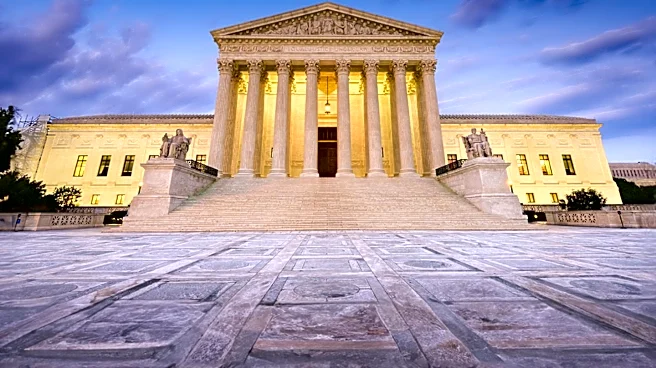
Supreme Court Justice Neil Gorsuch issued a significant concurrence in the case of Trump v. Slaughter, aligning with the majority decision that affirmed the President's authority to remove the head of the Federal Trade Commission (FTC). The ruling indicates
that federal entities previously considered 'independent' will now face increased presidential oversight. Gorsuch's concurrence delves into the historical and ideological origins of independent agencies, suggesting they arose from a Progressive Era philosophy that challenged the constitutional separation of powers. He argues that these 'fourth-branch' entities were designed to operate outside the traditional three-branch structure. While the majority opinion focused on the expansion of presidential power over executive functions, Gorsuch's opinion extends this discussion to question the permissibility of agencies exercising legislative and judicial powers independently of Congress and the courts, respectively. He implies that if executive power must be controlled by the President, then legislative and judicial powers should similarly be restored to their proper branches.
Why It's Important?
This decision and Justice Gorsuch's concurrence carry substantial implications for the structure and function of the U.S. federal government. By asserting greater presidential control over independent agencies, the ruling could fundamentally alter the regulatory landscape across various sectors, including business, finance, and internet governance. The shift means that the leaders of powerful agencies, which historically operated with a degree of political insulation, are now more directly accountable to the President. This could lead to more rapid policy changes aligned with presidential administrations' agendas, potentially reducing the stability and predictability that independent agencies were designed to provide. For industries regulated by these agencies, this could mean increased uncertainty and a greater need to adapt to shifting political priorities. Gorsuch's broader argument about re-evaluating cross-branch power-sharing could lead to future legal challenges against the legislative and judicial functions currently exercised by many federal agencies, potentially reshaping the balance of power among the three branches of government.
What's Next?
The immediate consequence of Trump v. Slaughter is that the President now has clearer authority to remove the heads of independent agencies that exercise executive power. This could lead to more frequent leadership changes within these agencies following presidential transitions, potentially resulting in significant policy shifts. Looking ahead, Justice Gorsuch's concurrence suggests a potential path for the Supreme Court to further scrutinize the constitutional legitimacy of agencies exercising legislative and judicial powers. This could trigger a series of legal challenges aimed at reallocating these powers back to Congress and the courts. Such a 'get-back-in-your-lanes' project, as implied by Gorsuch, would involve a comprehensive re-evaluation of the powers delegated to federal agencies over the past century. This could lead to legislative efforts to redefine agency mandates or judicial rulings that restrict their authority, impacting how regulations are created, enforced, and adjudicated across the federal bureaucracy.
Beyond the Headlines
Beyond the immediate legal and political ramifications, Justice Gorsuch's concurrence touches upon deeper constitutional questions regarding the separation of powers and the nature of modern governance. His critique of the 'fourth-branch' entities, rooted in Progressive Era philosophy, highlights a long-standing debate about the appropriate scope of administrative power in a democratic system. The decision could reignite discussions about the balance between efficiency in governance, often cited as a reason for independent agencies, and strict adherence to the constitutional framework of separated powers. If the Court were to pursue Gorsuch's suggested path, it could lead to a significant restructuring of the federal government, potentially reducing the influence of expert-driven agencies and increasing the direct political accountability of regulatory functions. This could also raise questions about the capacity of Congress and the judiciary to absorb and effectively manage the vast legislative and adjudicative responsibilities currently handled by agencies, potentially leading to new challenges in policy-making and legal enforcement.