








What's Happening?
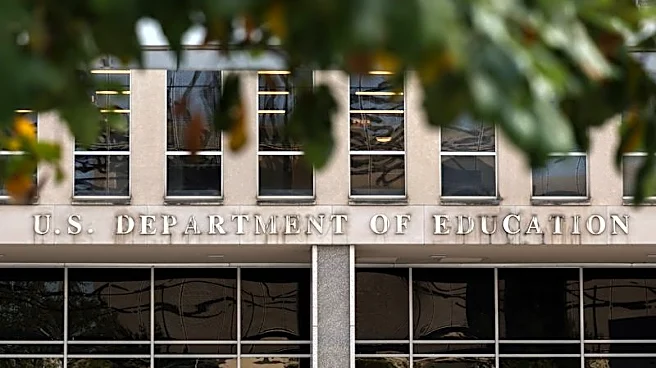
The Trump administration has announced a temporary reduction in interest rates for certain federal student loan borrowers. This initiative, led by the Education Department, aims to alleviate repayment burdens as student loan delinquencies reach their
highest level in six years. The interest rate cut, which reduces borrowing costs by 1 percentage point, is available to borrowers with federal Direct Loans issued after July 1, 2012, who are enrolled in automatic payments. The reduction is set to last until June 30, 2028. However, not all borrowers will benefit immediately, as eligibility requires enrollment in auto pay and, in some cases, loan consolidation. Currently, only 40% of borrowers are enrolled in auto pay, a figure the department hopes to increase with this incentive. Borrowers already using auto pay will see a smaller reduction due to an existing 0.25% discount.
Why It's Important?
This policy change is significant as it addresses the growing issue of student loan delinquencies, which have surged to 10.3% in the first quarter, marking a twenty-fold increase since mid-2024. The federal student loan portfolio has expanded to nearly $1.7 trillion, with millions of borrowers struggling to meet repayment obligations. By incentivizing auto pay enrollment, the administration aims to improve the financial health of the student loan system and ease the financial strain on borrowers. This move could potentially stabilize the student loan market and reduce the risk of defaults, benefiting both borrowers and the broader economy.
What's Next?
The interest rate reduction is temporary, set to expire on June 30, 2028. During this period, the administration will likely monitor the impact of the policy on delinquency rates and borrower behavior. The Trump administration is also planning broader changes to the student loan system, including new borrowing limits and repayment options starting July 1. These changes could further influence the landscape of student loan repayment and borrower decision-making. Stakeholders, including borrowers, financial institutions, and policymakers, will be closely watching the outcomes of these initiatives.