



What's Happening?
The Congressional Budget Office (CBO) has been involved in discussions regarding the potential decline of Congress, as highlighted in a Washington Post column by Paul Kane. The column suggests that Congress is at a crossroads, with a report from the Bipartisan
Policy Center indicating a decades-long decline that may be reaching a point of no return. The report cites political polarization and the nationalization of politics as factors contributing to this decline. Critics argue that Congress has become weaker, ceding power to the presidency and the Supreme Court. Former lawmakers and experts warn that without significant changes, Congress may remain permanently weakened.
Why It's Important?
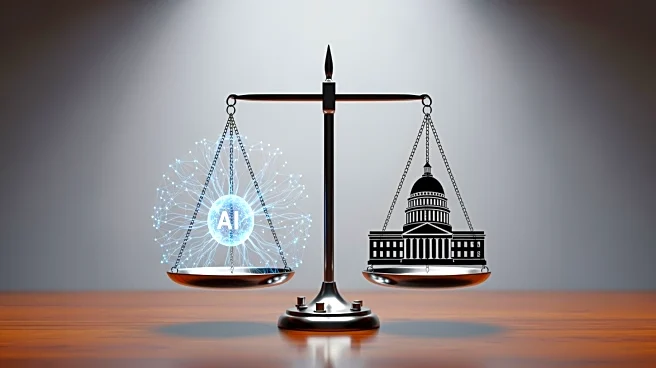
The potential decline of Congress has significant implications for the balance of power within the U.S. government. A weakened legislative branch could lead to increased executive power, reducing the effectiveness of checks and balances. This shift could impact public policy, as the presidency and the Supreme Court may have more influence over legislative decisions. The decline in congressional effectiveness could also affect public trust in government institutions, as evidenced by low approval ratings for Congress. If Congress fails to address these issues, it may struggle to fulfill its constitutional role as a coequal branch of government.
What's Next?
The future of Congress depends on its ability to address the issues contributing to its decline. Lawmakers may need to focus on bipartisan cooperation and effective legislation to restore public trust and strengthen the institution. Potential reforms could include changes to congressional procedures and efforts to reduce political polarization. The outcome of upcoming elections may also influence the direction of Congress, as shifts in party control could impact legislative priorities. Stakeholders, including political leaders and civil society groups, may play a role in advocating for changes to ensure Congress remains a vital part of the U.S. government.
Beyond the Headlines
The decline of Congress raises ethical and cultural questions about the role of government in society. As the legislative branch struggles to maintain its influence, there may be broader implications for democratic governance and civic engagement. The concentration of power in the executive branch could lead to concerns about accountability and transparency. Additionally, the decline in public trust in Congress may reflect broader societal trends, such as increasing political polarization and skepticism towards government institutions. Addressing these issues may require a cultural shift towards greater civic participation and engagement with the political process.