



What's Happening?
New York City is set to expand its trash containerization program to additional districts across all five boroughs by the end of 2027. Mayor Zohran Mamdani announced that the Department of Sanitation (DSNY) will implement full containerization in selected
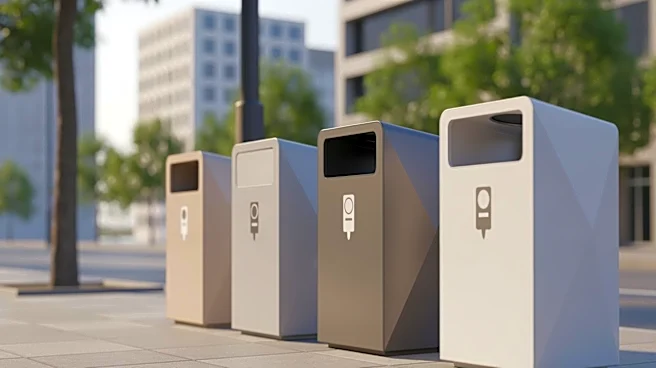
community districts, aiming for citywide adoption by 2031. The initiative will introduce the city's new Empire Bins, which will be serviced by automated side-loading garbage trucks. The districts slated for full containerization include Brooklyn District 8, Bronx Districts 2 and 5, Queens District 2, Staten Island District 1, and Manhattan District 2. This expansion follows the successful pilot program in West Harlem, which became the first neighborhood in North America to fully containerize its trash. The program will extend to higher-density buildings, utilizing over 6,500 Empire Bins across more than 3,500 buildings. The bins are designed to be accessed via keycard and eventually through a mobile app.
Why It's Important?
The expansion of trash containerization in New York City is a significant step towards improving urban sanitation and reducing street litter. By eliminating trash bags from sidewalks, the program aims to create cleaner streets and reduce the city's rat population. This initiative represents a major shift in waste management practices, potentially setting a precedent for other cities facing similar sanitation challenges. The program's success could lead to broader adoption of containerized trash systems, promoting environmental sustainability and public health. Additionally, the investment in infrastructure and technology, such as automated garbage trucks, highlights the city's commitment to modernizing its waste management systems.
What's Next?
As the program expands, the DSNY will continue to roll out Empire Bins and automated trucks across the designated districts. The city plans to allocate $15 million to the expense budget next year and $35.5 million in capital funding over the current and next fiscal years to support the initiative. The expansion aims to cover the remaining 30% of trash not yet containerized, moving closer to the goal of citywide implementation by 2031. Stakeholders, including community boards and building managers, will play a crucial role in facilitating the transition and ensuring the program's success.