


What's Happening?
NASA is conducting a series of nutrition-related research projects aboard the International Space Station to understand how space conditions affect nutrition-relevant organisms. These investigations are part of Northrop Grumman’s 24th commercial resupply
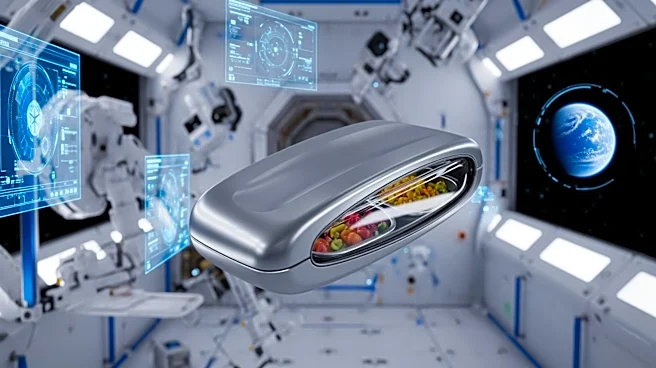
mission for NASA. The research includes studying plant-microbe interactions, such as how alfalfa plants interact with bacteria that convert nitrogen into a usable form for growth. Another study focuses on spirulina, a type of algae high in protein and antioxidants, which could support crew health by converting carbon dioxide into oxygen. Additionally, the European Space Agency's Seed Vigour investigation examines how spaceflight conditions affect seed growth, building on previous studies with arugula seeds.
Why It's Important?
Understanding how to grow and maintain food sources in space is crucial for long-term missions to the Moon, Mars, and beyond. These studies aim to improve the sustainability of space missions by ensuring that astronauts have reliable sources of nutrition. The research could lead to innovations in how plants and algae are cultivated in space, potentially reducing the need for resupply missions and enhancing the self-sufficiency of space crews. The findings may also have applications on Earth, particularly in improving agricultural practices and food security.
What's Next?
The results of these studies will inform future space missions and the development of sustainable life support systems. As NASA and its partners continue to explore deeper into space, the ability to grow food in microgravity will become increasingly important. The research may lead to new methods for protecting and cultivating crops during long-duration missions, ultimately supporting the goal of establishing a human presence on the Moon and Mars.