





What's Happening?
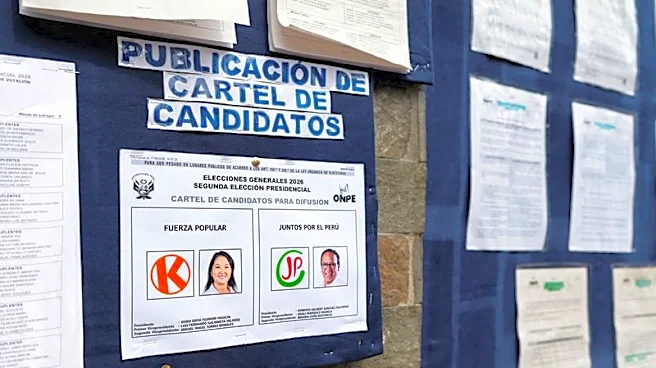
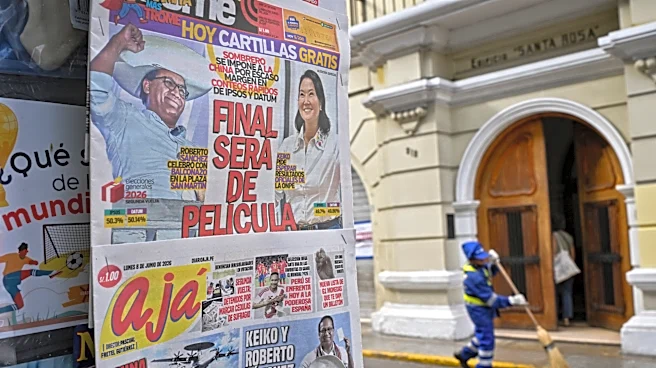
In Peru, the presidential runoff election has resulted in a near tie between conservative politician Keiko Fujimori and nationalist congressman Roberto Sánchez. With 93% of the ballots counted, Fujimori has garnered 50.095% of the votes, while Sánchez has received
49.905%. This election is set to determine Peru's ninth president in a decade. Both candidates emerged from a crowded field of 33 contenders in the initial April election, where neither secured more than 20% of the vote. The slow vote tallying process is attributed to the legal requirement for each ballot and tally sheet to be physically transported to over 100 offices for counting, including those from 63 countries. Crime, particularly extortion, is a major concern for voters, with 84% of urban respondents fearing victimization, according to a 2025 survey by the National Institute of Statistics and Informatics.
Why It's Important?
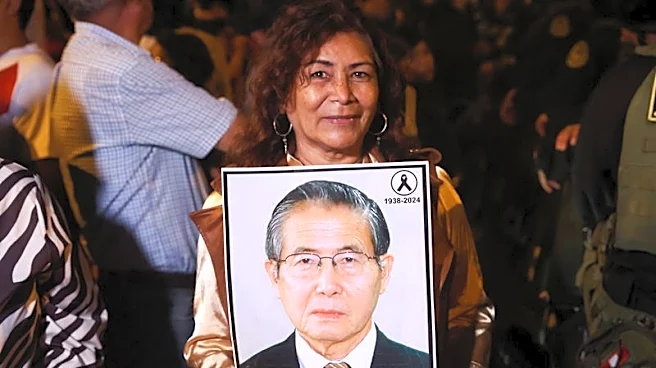
The outcome of this election holds significant implications for Peru's political stability and its approach to crime and corruption. Keiko Fujimori, associated with her father's controversial legacy, promises a tough stance on crime, including prison labor and increased military presence. Roberto Sánchez, linked to the imprisoned former President Pedro Castillo, focuses on police reform and rural development. The election reflects broader societal concerns about crime and governance, with both candidates struggling to distance themselves from past political controversies. The result will influence Peru's domestic policies and its international relations, particularly with countries like China, which Sánchez supports for investment.
What's Next?
The final election results are expected within 30 days, as announced by Roberto Burneo, the chief electoral authority. The winner will be inaugurated on July 28 for a five-year term. Both candidates have urged their supporters to remain calm as the vote count continues. The new president will face the challenge of addressing crime and corruption, key issues that dominated the campaign. The election's outcome will also impact Peru's economic policies and its engagement with international partners, as both candidates have proposed different approaches to foreign investment and economic development.