




What's Happening?
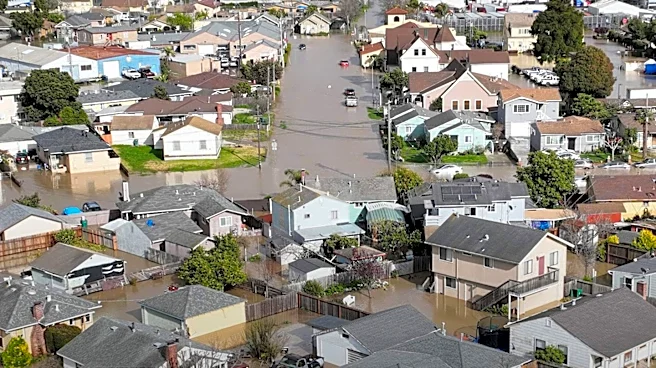
The San Francisco Bay Area experienced significant disruption due to heavy rainfall, leading to widespread road flooding and property damage. In the city's Excelsior District, an elderly homeowner narrowly avoided serious injury when a plaster ceiling
collapsed due to water leakage. The incident caused thousands of dollars in roof and ceiling repairs. Additionally, flooding created hazardous conditions on southbound Interstate 280 near Westborough Boulevard, where parts of the roadway were submerged under approximately two feet of water. The California Highway Patrol reported multiple vehicle crashes, including hydroplaning incidents and collisions with the center divider. Some motorists were left stranded, with one vehicle stuck in a ditch and another experiencing engine trouble after water ingress. Local authorities were overwhelmed with calls for service, and a resident, Andy Wang, took it upon himself to clear a blocked storm drain to alleviate the flooding.
Why It's Important?
This event highlights the immediate and significant impact of severe weather on urban infrastructure and public safety in the U.S. The widespread flooding disrupted transportation, leading to traffic accidents and stranded vehicles, which can have economic consequences through delays and property damage. The damage to homes, such as the ceiling collapse, underscores the financial burden and personal distress that can result from such natural occurrences. The overwhelming number of service calls to authorities indicates a strain on emergency response systems, emphasizing the need for robust disaster preparedness and infrastructure resilience. For residents, the incident serves as a stark reminder of the hazards associated with heavy rainfall and the importance of heeding warnings to avoid flooded roadways, which can prevent injuries and further property loss.
What's Next?
Crews are currently working to patch the damaged roof in San Francisco to prevent further water intrusion. Authorities continue to urge drivers to avoid flooded roadways and to turn around rather than attempt to drive through standing water. This incident may prompt local government and infrastructure agencies to review and potentially enhance their storm drain maintenance protocols and flood preparedness strategies. Residents affected by property damage will likely be navigating insurance claims and repair processes. The event also serves as a reminder for individuals to assess their own flood preparedness, including reviewing insurance policies and having emergency plans in place for future heavy rainfall events in the Bay Area.
Beyond the Headlines
The recurring nature of such weather events in regions like the Bay Area points to broader challenges related to climate change and urban development. As weather patterns become more unpredictable, the strain on existing infrastructure designed for historical climate norms will likely increase. This raises questions about the long-term sustainability of current urban planning and the necessity for significant investment in climate-resilient infrastructure. The community response, exemplified by Andy Wang clearing a storm drain, also highlights the role of civic engagement and mutual aid in times of crisis, often filling gaps when official services are stretched thin. This event could spark discussions on community-led initiatives and public-private partnerships to bolster local resilience against environmental challenges.