
What's Happening?
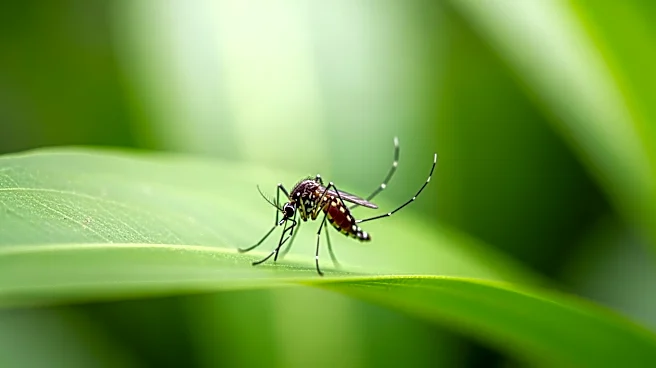
The Chicago Department of Public Health has announced the first detection of West Nile virus-positive mosquitoes in the city for the current year. This announcement follows a similar report from the state's
health department in mid-May, which identified West Nile-positive mosquitoes in other parts of Illinois. While no human cases have been reported in Chicago so far, the virus is known to be transmitted to humans through mosquito bites. The Centers for Disease Control and Prevention (CDC) notes that the risk of contracting the virus is highest from June to October, which is the peak mosquito season. Most people infected with the virus do not exhibit symptoms, but about 20% may develop fever and flu-like symptoms. Severe cases, which occur in approximately 1 in 150 people, can lead to serious health complications, particularly in individuals over 55 or those with weakened immune systems.
Why It's Important?
The detection of West Nile virus-positive mosquitoes in Chicago is significant as it signals the start of the virus's active season in the region. Public health officials emphasize the importance of preventive measures to protect against mosquito bites, as there are no licensed vaccines or medications to treat or prevent the virus. The potential health impact is considerable, especially for vulnerable populations, including the elderly and those with compromised immune systems. The Chicago Department of Public Health is actively working to mitigate the risk through various measures, including treating catch basins with larvicide and conducting mosquito testing and spraying. Public awareness and preventive actions are crucial to minimizing the spread of the virus and protecting public health.
What's Next?
The Chicago Department of Public Health will continue its efforts to control the mosquito population and monitor the situation closely. This includes ongoing treatment of catch basins, mosquito testing, and spraying to reduce the number of adult mosquitoes. Residents are encouraged to take personal preventive measures, such as using insect repellent, wearing protective clothing, and ensuring that their homes are mosquito-proof. The department will likely provide updates and guidance as the mosquito season progresses, and any changes in the situation will be communicated to the public to ensure safety and awareness.