






What's Happening?
Multiple U.S. government agencies, including the Cybersecurity and Infrastructure Security Agency (CISA), the FBI, HHS, USDA, and DoT, have issued a joint advisory to critical industries, particularly food and agriculture, regarding malicious cyber activity
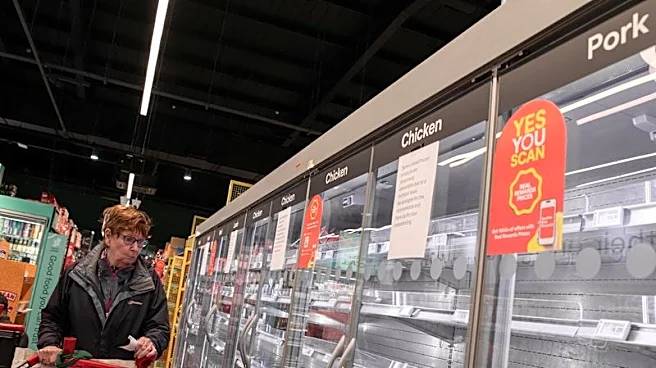
targeting industrial refrigeration and cold chain monitoring systems globally. This warning follows recent cyberattacks in Europe where internet-connected refrigeration systems in hundreds of grocery stores were compromised, leading to temperature increases as high as 50°C and significant food loss. Similar incidents were also reported at U.S. military base commissaries in August. The agencies are urging owners and operators to take immediate defensive actions, such as eliminating public internet exposure for these systems, isolating operational technology (OT) devices, enforcing strong credential security, applying software patches, restricting access, maintaining reliable backups, and monitoring for unexpected activity. These recommendations align with the Cross-Sector Cybersecurity Performance Goals (CPGs) developed by CISA and the U.S. National Institute of Standards and Technology (NIST). The attacks exploit vulnerabilities in unpatched or internet-accessible controllers, allowing remote alteration of settings to force units into continuous heating and defrost cycles.
Why It's Important?
The cyberattacks on refrigeration systems pose a significant threat beyond just financial losses from spoiled inventory; they represent a critical food safety issue. If food products undergo temperature abuse without retailers' knowledge, they could still appear cold but have been exposed to unsafe temperatures for hours, posing health risks to consumers. Many affected stores found that the compromised refrigeration controllers were also their primary warning systems, preventing staff from being alerted to the issue. This highlights a vulnerability where a single point of failure can lead to widespread product spoilage and potential public health crises. The U.S. government's intervention underscores the severity of these threats to critical infrastructure, emphasizing that the food supply chain is a prime target for malicious actors. Protecting these systems is crucial for maintaining food security, public health, and economic stability within the food and agriculture sectors. The incidents also highlight the broader implications of interconnected systems and the need for robust cybersecurity measures across all industries handling temperature-sensitive goods.
What's Next?
Food retailers and other industries utilizing cold chain monitoring systems are expected to implement the recommended cybersecurity measures to mitigate risks. This includes a comprehensive review of their current systems to identify and address vulnerabilities such as internet exposure, outdated software, and weak authentication protocols. Companies may need to invest in new technologies, such as independent wireless temperature monitors that operate on separate networks, to provide a redundant alert system. There will likely be an increased focus on employee training regarding cybersecurity best practices and incident response plans. Regulatory bodies may also consider developing more stringent cybersecurity standards for critical infrastructure sectors, particularly those involved in food and medicine storage. The ongoing threat of cyberattacks suggests a continuous need for vigilance and adaptation in cybersecurity strategies to protect against evolving threats. Collaboration between government agencies and private industry will be essential to share threat intelligence and develop effective defenses against future attacks.
Beyond the Headlines
These cyberattacks reveal a deeper vulnerability in modern infrastructure: the increasing reliance on interconnected, often internet-enabled, operational technology (OT) systems. While these systems offer efficiency, they also create new attack surfaces for malicious actors. The incidents underscore the critical intersection of cybersecurity and physical safety, particularly in sectors like food and healthcare where temperature control is paramount. The potential for attackers to not only cause economic damage but also to compromise public health by manipulating environmental controls raises ethical and national security concerns. This situation highlights the need for a holistic approach to security that integrates IT and OT security strategies, recognizing that a cyber breach can have tangible, real-world consequences. Furthermore, it prompts a re-evaluation of supply chain resilience, as a single point of failure in a cold chain system can have cascading effects across an entire distribution network, impacting availability and safety of essential goods.