


What's Happening?
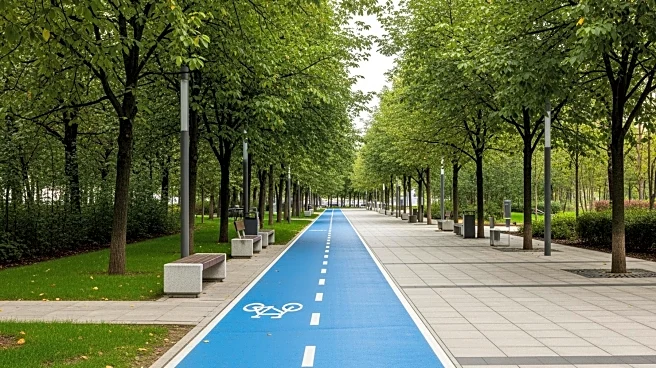
A new $15.5 million project is underway to enhance the eastern edge of Prospect Park in Brooklyn, New York. The project includes the installation of a two-way protected bike lane and a pedestrian plaza along Ocean and Parkside Avenues. This initiative,
led by the Prospect Park Alliance, aims to connect existing bike paths around the park and improve pedestrian access. The project is funded by various city departments and local government offices. The new infrastructure will include a bike lane protected from vehicles, new lighting, seating, and a plaza featuring a monument to Shirley Chisholm.
Why It's Important?
The development of a protected bike lane and pedestrian plaza is significant for urban mobility and public safety in Brooklyn. By enhancing access to Prospect Park, the project promotes sustainable transportation and encourages outdoor activities. The inclusion of a monument to Shirley Chisholm, the first Black woman elected to Congress, adds cultural and historical value to the area. This project reflects broader urban planning trends focused on creating pedestrian-friendly environments and reducing reliance on motor vehicles. It also highlights the importance of public spaces in fostering community engagement and cultural expression.
What's Next?
The project is expected to take 18 months to complete, with construction occurring in phases. The first phase will focus on restoring the perimeter of the park, followed by the installation of public artwork. The Prospect Park Alliance is also planning additional upgrades, including a new pavilion with upgraded facilities. As the project progresses, it will be important to monitor its impact on local traffic patterns and community use. The successful completion of this project could serve as a model for similar urban development initiatives in other parts of New York City.
Beyond the Headlines
The transformation of Prospect Park's east side is part of a larger movement towards sustainable urban development. By prioritizing pedestrian and cyclist infrastructure, the project aligns with global efforts to reduce carbon emissions and promote healthier lifestyles. The inclusion of the Shirley Chisholm monument also underscores the role of public art in celebrating diversity and history. This development highlights the potential for urban spaces to serve as platforms for cultural expression and community building, contributing to the social and environmental resilience of cities.