



What's Happening?
Horn Nature Conservation has launched a community-led mangrove restoration project in Garacad and Dhinawado, along Somalia's Mudug coastline. This initiative aims to address significant environmental challenges such as coastal erosion, shifting sand dunes,
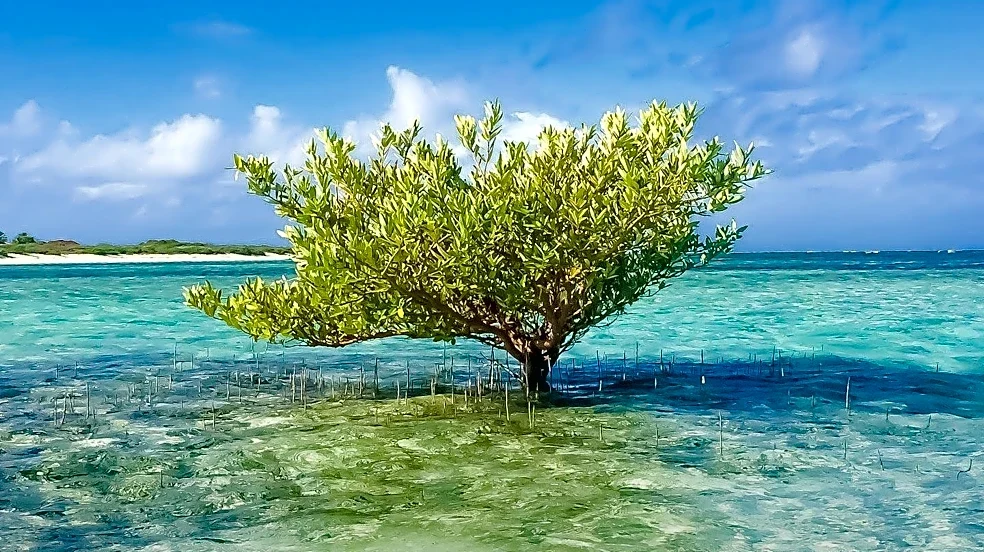
and declining fish populations that are impacting local communities. The project involves establishing two community-managed mangrove nurseries, planting 250,000 mangrove trees across approximately 85 hectares, and implementing sand dune stabilization measures at high-risk sites. Additionally, it includes training 20 agro-ecological mobilizers, with a focus on empowering women and youth, and forming Community Coastal Management Committees. The 18-month pilot program covers 30 kilometers of coastline and is designed to benefit around 3,500 people, making it the first large-scale, community-driven mangrove pilot in the region. The project also emphasizes data collection to identify the most suitable mangrove species and track survival rates, moving mangrove restoration from theoretical studies to practical field testing.
Why It's Important?
The mangrove restoration project in Somalia is crucial for several reasons, primarily due to its multifaceted benefits for environmental protection, economic stability, and community resilience. Mangroves act as natural barriers, slowing waves and reducing coastal erosion, which is a significant issue along the Mudug coastline. Their root systems provide vital habitats for young fish, crabs, and shrimp, thereby supporting and improving local fisheries, which are a primary source of income and food for many coastal families. Beyond direct environmental and economic impacts, the project creates new job opportunities in nursery management, planting, and monitoring, particularly for women and youth, fostering sustainable livelihoods. Furthermore, mangroves play a critical role in climate adaptation by storing carbon and making coastal communities more resilient to extreme weather events. The community-led approach ensures local ownership and long-term sustainability, as residents are directly involved in planning, planting, and protecting these vital ecosystems, thereby strengthening the overall coastal system.
What's Next?
Following the initial 18-month pilot phase, the Garacad mangrove restoration project will focus on evaluating its effectiveness and gathering crucial data on species survival and growth. The lessons learned from this pilot will be instrumental in guiding future restoration efforts along the wider 120-kilometer Mudug coastline. Successful outcomes and robust data are expected to attract additional partners and funding, potentially scaling the project into a broader regional movement for coastal resilience in Somalia. The initiative also aims to continue empowering local communities through ongoing training in climate adaptation, biodiversity, and sustainable fishing practices, ensuring that the skills and knowledge remain within the community. The long-term vision includes exploring potential blue carbon options, which could provide further financial incentives for mangrove conservation. Continued monitoring and adaptation will be key to addressing challenges such as site suitability, protection of young trees from livestock and harsh weather, and securing long-term funding for maintenance.
Beyond the Headlines
The Horn Nature Conservation's mangrove restoration project in Somalia extends beyond immediate environmental and economic benefits, touching upon deeper societal and ethical implications. By empowering local communities, particularly women and youth, to lead conservation efforts, the project fosters a sense of ownership and self-determination, shifting from external aid dependency to community-driven solutions. This approach not only ensures the longevity of the restoration efforts but also builds social capital and strengthens local governance structures. Ethically, the project addresses environmental justice by protecting vulnerable coastal populations from the disproportionate impacts of climate change and environmental degradation. Culturally, the re-establishment of mangroves can revive traditional ecological knowledge and practices, reconnecting communities with their natural heritage. The initiative also highlights the potential for nature-based solutions to contribute to peacebuilding in conflict-affected regions by providing shared goals and economic opportunities that transcend divisions, ultimately fostering a more stable and resilient society.