






What's Happening?
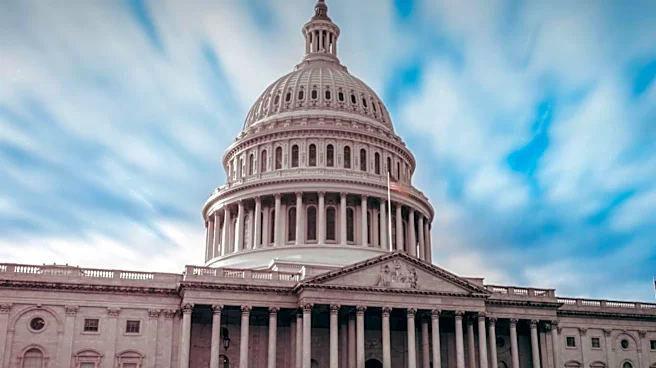
President Donald Trump has called on Senate Majority Leader John Thune to cancel the Senate's upcoming August break until a strict proof-of-citizenship voting bill, known as the SAVE America Act, is passed. Despite Trump's insistence, the bill lacks sufficient
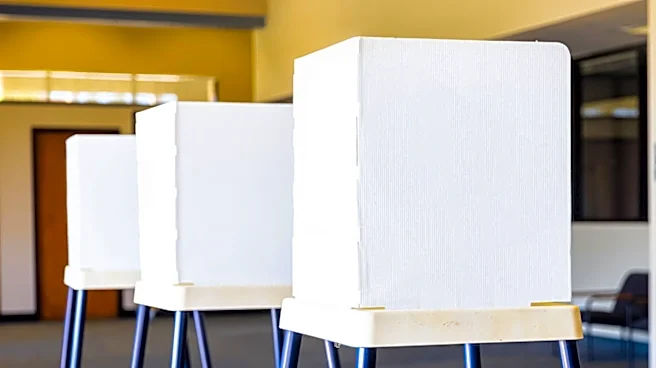
support to overcome the legislative filibuster, which requires a 60-vote threshold in the 100-member Senate. The Republican majority, holding 53 seats, is unable to advance the bill or alter Senate rules to bypass the filibuster. Trump has been pressuring Thune to find a way to pass the bill, which aims to enforce citizenship proof for voter registration and photo ID requirements for voting. The bill has faced criticism for potentially disenfranchising around 20 million American voters who may not have the necessary documentation.
Why It's Important?
The push for the SAVE America Act highlights ongoing debates over voting rights and election integrity in the U.S. The bill's passage could significantly impact voter turnout, particularly among groups less likely to have the required documentation, such as minorities and low-income individuals. This legislative effort is part of a broader Republican strategy to address alleged election fraud, a claim that has been widely disputed. The outcome of this legislative battle could influence the political landscape ahead of the midterm elections, affecting both voter morale and participation. Additionally, the pressure on Senate leadership to prioritize this bill over other legislative matters underscores the contentious nature of voting rights debates in the current political climate.
What's Next?
If the Senate fails to pass the SAVE America Act before the August break, it could lead to further political maneuvering and pressure from both President Trump and his allies. The potential cancellation of the Senate's break could disrupt plans to address other legislative priorities, such as government funding and sanctions on Russia. As the midterm elections approach, the handling of this bill may also impact Republican leadership dynamics and campaign strategies. Continued advocacy from Trump and his supporters may keep the issue at the forefront of political discourse, potentially influencing voter perceptions and party unity.