





What's Happening?
Kearney, Missouri, city leaders have initiated a community survey to gather resident feedback on the use of Flock automated license plate reader cameras. This move follows a recent community meeting and comes shortly after nearby Excelsior Springs, Missouri, decided
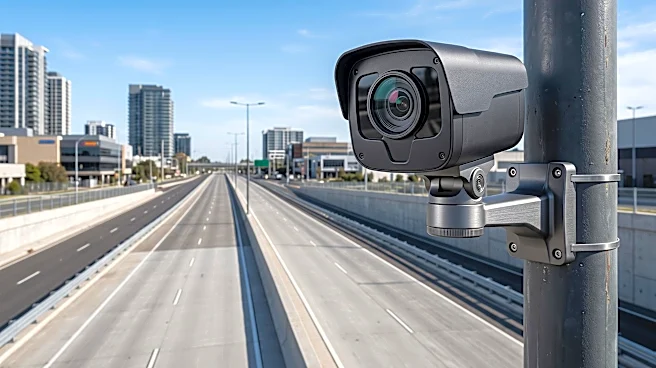
to discontinue its use of Flock cameras due to resident concerns. The survey asks residents to select a statement reflecting their stance on the cameras and provides an open-ended question for suggestions on safeguards or restrictions. Currently, Kearney operates 14 Flock cameras across the city, which capture an average of 46,000 license plate reads daily. The city police department has confirmed these figures. Should the Board of Aldermen decide to remove the cameras, a resolution would need to be passed, and the city would still be obligated to pay the remaining balance of its multi-year contract with Flock.
Why It's Important?
The implementation and public perception of automated license plate reader (ALPR) technology, such as Flock cameras, represent a significant point of contention regarding privacy versus public safety in U.S. communities. The decision by Kearney leaders to conduct a community survey highlights a growing trend of local governments seeking direct public input on surveillance technologies. This engagement is crucial for fostering transparency and trust between residents and their municipal authorities. The outcome in Kearney could influence other cities grappling with similar debates, particularly in Missouri, where Excelsior Springs has already opted out. The financial implications of contract termination, as noted by Kearney officials, also underscore the complexities and potential costs associated with adopting and then rescinding such technologies, impacting municipal budgets and long-term planning for public safety infrastructure.
What's Next?
The immediate next step for Kearney is the collection and analysis of responses from the community survey. The input gathered will directly inform the Board of Aldermen's future decisions regarding the Flock cameras. Following the survey period, the Board will likely hold further discussions or public meetings to deliberate on the findings and consider potential actions. These actions could range from maintaining the current camera system, implementing additional safeguards or restrictions based on resident feedback, or ultimately deciding to remove the cameras. If removal is chosen, the city will need to pass a formal resolution and address the financial obligations of the existing contract. The decision will be closely watched by other municipalities considering or currently using similar surveillance technologies, potentially setting a precedent for how community concerns are addressed in the deployment of ALPR systems.
Beyond the Headlines
The debate over Flock cameras in Kearney extends beyond immediate public safety concerns, touching upon fundamental questions of civil liberties and the evolving nature of surveillance in modern society. The widespread deployment of ALPR technology raises significant privacy implications, as it allows for the mass collection and retention of location data, potentially creating detailed records of individuals' movements. This data, while useful for law enforcement in specific cases, also presents risks of misuse, data breaches, and the erosion of privacy rights. The community's engagement in Kearney reflects a broader societal discussion about the appropriate balance between security measures and individual freedoms. The outcome in Kearney could contribute to the national dialogue on regulating surveillance technologies, potentially influencing future legislation or policy frameworks that govern how such systems are implemented, overseen, and held accountable to the public.