



What's Happening?
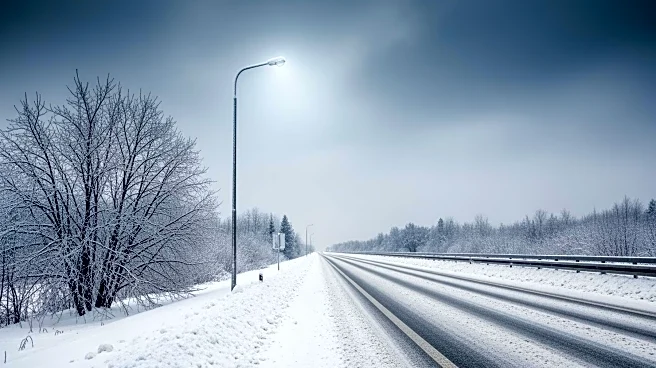
A fast-moving snowstorm swept across central New York state and parts of Connecticut, causing icy roads and significant travel disruptions. The storm, which began Friday evening, resulted in snowfall rates of several inches per hour in the hardest-hit
areas. The National Weather Service reported accumulations of 6 to 12 inches in a band stretching from Syracuse through southeast New York and western Connecticut to eastern Long Island. New York City, initially forecasted to receive 6 to 8 inches, saw only 2 to 4 inches, sparing it from major disruption. Despite widespread icing, only a few thousand power outages were reported in New York, Pennsylvania, and New Jersey. Airports in New York and Boston experienced significant flight cancellations and delays, though conditions improved as the day progressed.
Why It's Important?
The snowstorm's impact on travel during one of the busiest weeks of the year highlights the vulnerability of infrastructure to severe weather events. The disruptions at major airports could have ripple effects on national and international travel, affecting holiday plans for many. Additionally, the storm underscores the importance of preparedness and response strategies for municipalities and emergency services in managing such events. The relatively low number of power outages suggests effective management and resilience of the power grid in the affected areas, which is crucial for maintaining public safety and minimizing economic losses.
What's Next?
As the storm moves offshore, attention shifts to the Upper Midwest and Great Lakes, where heavy snow and localized blizzard conditions are expected. The next storm is developing in the central U.S., with snow predicted to break out from the Dakotas to Denver. The storm will intensify as it moves toward northern Lake Michigan, potentially causing blizzard conditions in Wisconsin and Michigan. Freezing rain is forecasted for parts of eastern New York and Southern New England, which could lead to further travel disruptions and power outages.
Beyond the Headlines
The storm's impact on travel and infrastructure may prompt discussions on improving weather forecasting and emergency response systems. The resilience of the power grid in handling such events could be a focus for future infrastructure investments. Additionally, the storm serves as a reminder of the increasing frequency and intensity of weather events, possibly linked to broader climate change patterns, necessitating long-term planning and adaptation strategies.