


What's Happening?
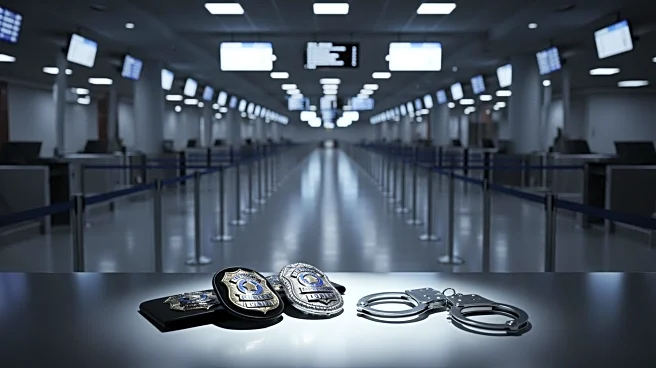
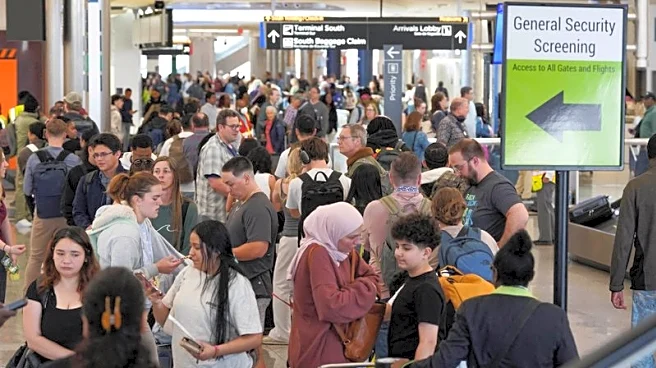
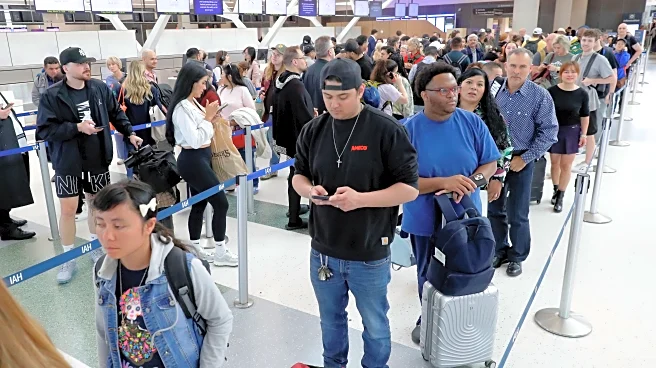
President Donald Trump has ordered federal immigration agents to U.S. airports to alleviate security line congestion caused by a budget impasse. This decision comes as air travelers face long waits and Transportation Security Administration (TSA) screeners
work without pay due to Congress's failure to renew Department of Homeland Security (DHS) funding. The move is part of Trump's strategy to pressure Democrats into agreeing on a funding bill for DHS. White House border czar Tom Homan is leading the effort, coordinating with TSA and Immigration and Customs Enforcement (ICE) to determine the specific roles and numbers of agents needed. The plan aims to deploy ICE agents to major airports with significant wait times, potentially assigning them to guard exit lanes or check passenger IDs, thus freeing TSA agents for screening duties.
Why It's Important?
The deployment of immigration officers to airports highlights the ongoing political struggle over immigration policy and budget priorities in the U.S. The shutdown has significant implications for national security and public convenience, as it affects hundreds of thousands of homeland security workers. The decision to use ICE agents in this capacity underscores the administration's focus on immigration enforcement, which has been a contentious issue. The move could impact public perception of airport security and the role of immigration officers, potentially leading to increased scrutiny and debate over the use of federal resources in domestic security operations.
What's Next?
The Senate is expected to advance the nomination of Sen. Markwayne Mullin as the next homeland security secretary, which could influence future DHS operations and policies. Meanwhile, discussions between the White House and a bipartisan group of senators continue, with the aim of resolving the shutdown. The effectiveness of ICE agents in reducing airport wait times will be closely monitored, and any operational challenges or public backlash could prompt further adjustments. The situation remains fluid, with potential for further political negotiations and public response.