



What's Happening?
The Hawaii State Energy Office, in collaboration with Hawaiian Electric and the Hawaii Emergency Management Agency (HIEMA), has secured $18.5 million in federal funding. This funding will support $25 million in total investments aimed at enhancing grid
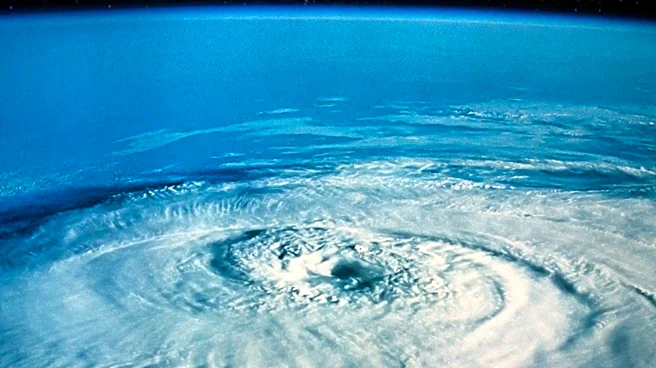
resilience and mitigating hazards across Maui, Hawaii Island, and Oʻahu. The projects, scheduled for completion between 2027 and 2029, will focus on identifying and reducing risks to the electrical grid from natural hazards such as wildfires, flooding, and hurricanes. Key initiatives include establishing five Critical Customer Hubs (CCHs) in West Maui and the Koʻolaupoko region of Windward Oʻahu. These hubs are designed to keep essential community services like fire stations, police stations, medical facilities, grocery stores, pharmacies, and fuel stations operational during prolonged power outages. Other projects involve developing a digital twin of the grid for early detection of power quality issues, upgrading Energy Management System (EMS) platforms for real-time monitoring on Maui and Hawaii Island, and conducting a comprehensive hazard risk assessment for Maui.
Why It's Important?
This significant federal investment is crucial for strengthening Hawaii's energy infrastructure against the increasing threats posed by natural disasters. By improving grid resilience, the state aims to reduce the frequency and duration of power outages, ensuring a more reliable power supply for critical community facilities. The establishment of Critical Customer Hubs is particularly vital, as it provides a lifeline for essential services during emergencies, directly impacting public safety, health, and economic stability. The modernization of EMS platforms and the development of a digital twin will enhance the grid's ability to detect and respond to issues proactively, minimizing downtime and potential damage. Given Hawaii's geographic vulnerability to hurricanes, wildfires, and other climate-related events, these projects are essential for protecting residents, supporting local businesses, and maintaining critical infrastructure, thereby bolstering the state's overall disaster preparedness and recovery capabilities.
What's Next?
The five funded projects are slated for completion between 2027 and 2029. Over the next few years, the Hawaii State Energy Office, Hawaiian Electric, and HIEMA will oversee the implementation of these initiatives. This includes the construction and operationalization of the Critical Customer Hubs, the deployment of the digital twin grid modeling system, and the upgrades to the Energy Management System platforms. Regular progress reports and public updates are expected as these projects advance. The hazard risk assessment for Maui will likely inform future mitigation strategies and investments. Successful implementation of these projects could serve as a model for other U.S. regions facing similar climate-related vulnerabilities, potentially leading to further federal funding opportunities for grid modernization and resilience efforts nationwide. Stakeholders will closely monitor the effectiveness of these upgrades in reducing power outages and maintaining essential services during future natural hazard events.
Beyond the Headlines
Beyond the immediate benefits of enhanced grid resilience, this investment signifies a broader strategic shift towards proactive climate adaptation and infrastructure hardening in vulnerable regions. The concept of Critical Customer Hubs represents an innovative approach to local energy resilience, recognizing that centralized grid failures can have cascading effects on community well-being. By decentralizing critical power supply, Hawaii is not only protecting essential services but also fostering a more distributed and robust energy ecosystem. This initiative also highlights the growing integration of advanced technology, such as digital twins and real-time monitoring systems, into infrastructure management, moving towards a more intelligent and responsive grid. The long-term implications include potential reductions in economic losses from disasters, improved public health outcomes during emergencies, and a strengthened sense of security for residents. This proactive stance could also influence policy discussions at the federal level regarding infrastructure investment and climate resilience for other coastal and disaster-prone states.