



What's Happening?
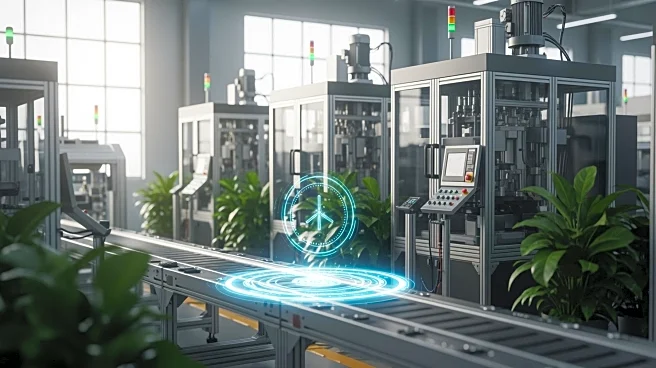
India is intensifying efforts to achieve carbon-neutral manufacturing as part of its commitment to becoming a net-zero carbon emission country by 2070. The focus is on reducing emissions across Scope 1, 2, and 3 categories, which include direct emissions,
indirect emissions from purchased energy, and emissions across the supply chain. Strategies involve switching to renewable energy, enhancing energy efficiency, and utilizing carbon capture and storage technologies. The country is also exploring investment strategies like green bonds and ESG-linked finance to support these initiatives.
Why It's Important?
As one of the world's fastest-growing economies, India's transition to carbon-neutral manufacturing is critical for global climate efforts. The manufacturing sector is a significant contributor to greenhouse gas emissions, and India's leadership in this area could influence other developing nations. Achieving carbon neutrality will not only help mitigate climate change but also enhance India's competitiveness in the global market by aligning with international sustainability standards. This transition is essential for meeting both domestic and international climate commitments.
What's Next?
India faces challenges such as high initial costs and the need for consistent carbon accounting systems. Overcoming these obstacles will require coordinated efforts between the government, industry, and financial institutions. The development of a clear roadmap for implementation, including baseline emissions audits and technology retrofitting, will be crucial. As India progresses, it could serve as a model for other nations seeking to balance economic growth with environmental sustainability.