


What's Happening?
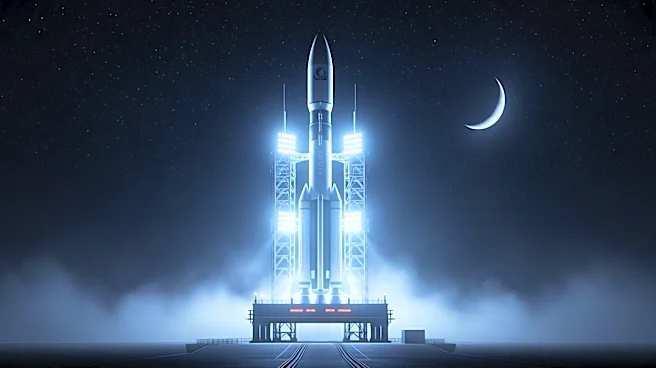
NASA has successfully launched Artemis II, marking the first crewed lunar mission since 1972. The mission, which took off from the Kennedy Space Center, involves four astronauts who will travel around the far side of the moon. This mission is a significant
step in NASA's Artemis program, which aims to establish a sustainable human presence on the moon by the end of the decade. The launch is part of a broader effort to explore deeper space and eventually send humans to Mars. The mission is expected to provide valuable data and experience for future lunar landings and long-duration space travel.
Why It's Important?
The Artemis II mission is crucial for several reasons. It represents a major milestone in NASA's efforts to return humans to the moon and lays the groundwork for future exploration of Mars. The mission is expected to advance scientific understanding of the moon and space travel, potentially leading to technological innovations and economic opportunities. It also reinforces U.S. leadership in space exploration, which has strategic implications in terms of international collaboration and competition. The mission could inspire a new generation of scientists and engineers, contributing to workforce development in the aerospace sector.
What's Next?
Following the successful launch of Artemis II, NASA will focus on the next phases of the Artemis program. This includes Artemis III, which aims to land astronauts on the lunar surface, including the first woman and the next man. NASA will continue to develop the necessary technologies and partnerships to support sustainable lunar exploration. The data and experience gained from Artemis II will inform these efforts, helping to refine mission planning and execution. International partners and private companies are expected to play a significant role in future missions, expanding the scope and impact of lunar exploration.