


What's Happening?
Cuban President Miguel Díaz-Canel has issued a defiant response to President Donald Trump's recent threats towards Cuba. Trump suggested a potential 'takeover' of the island, citing Cuba's economic vulnerabilities exacerbated by U.S. sanctions. Díaz-Canel condemned
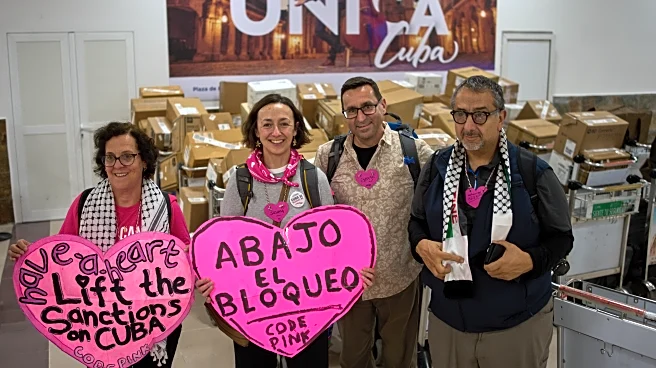
the U.S. for its aggressive stance, accusing it of waging an economic war against Cuba. The situation follows the U.S.'s efforts to isolate Cuba economically, including cutting off oil supplies, and comes amid broader geopolitical tensions involving Venezuela and other regional allies.
Why It's Important?
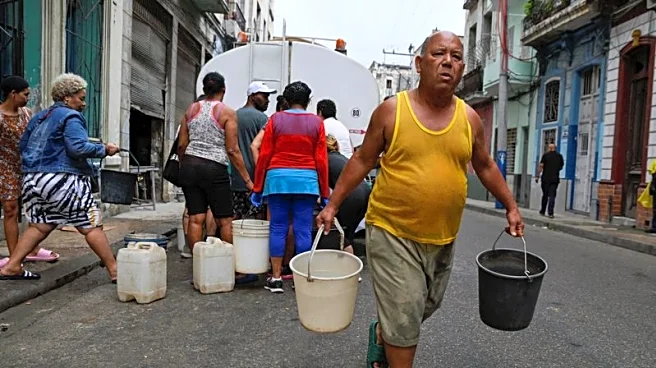
The escalating rhetoric between the U.S. and Cuba marks a significant moment in U.S.-Cuba relations, which have been fraught since the Cuban Revolution. The potential for increased U.S. intervention could destabilize the region further and impact global diplomatic relations. Cuba's economic struggles, compounded by U.S. sanctions, highlight the humanitarian implications of geopolitical conflicts. The situation also reflects the broader U.S. foreign policy approach under President Trump, characterized by aggressive tactics and unilateral actions.
What's Next?
Cuba is likely to continue seeking diplomatic solutions to ease tensions with the U.S., as indicated by ongoing negotiations reported by Cuban officials. The international community may play a role in mediating the conflict, given the potential regional and global implications. The outcome of these negotiations could influence future U.S.-Cuba relations and set a precedent for how the U.S. engages with other nations under similar circumstances.