


What's Happening?
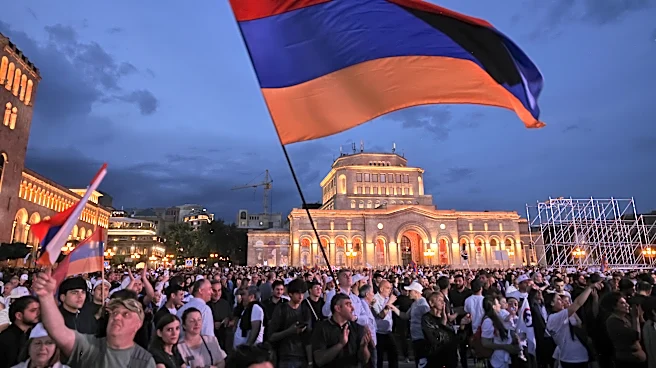
Armenia is heading to the polls for parliamentary elections amidst significant pressure from Russia. The elections are seen as a critical test for Prime Minister Nikol Pashinyan's government, which has been steering the country towards closer ties with
Europe. This shift has strained Armenia's historically close relationship with Russia, which has responded with economic measures such as banning imports of Armenian cognac and other goods. The Kremlin's actions are perceived as attempts to discourage Armenia's westward orientation. The geopolitical tension is further complicated by Armenia's economic dependence on Russia, particularly in terms of subsidized gas supplies. The elections will determine whether Pashinyan's Civil Contract party can maintain its political dominance despite these challenges.
Why It's Important?
The outcome of Armenia's elections holds significant implications for regional stability and international relations. Armenia's pivot towards Europe represents a major shift in the geopolitical landscape of the South Caucasus, a region traditionally under Russian influence. If Pashinyan's party succeeds, it could embolden other former Soviet states to pursue similar paths, potentially weakening Russia's influence in the region. Economically, Armenia's reliance on Russian energy supplies means that any disruption could have severe consequences for its economy. The situation also highlights the broader struggle between Western and Russian interests in Eastern Europe and the Caucasus, with potential impacts on global diplomatic and economic alignments.
What's Next?
Following the elections, Armenia will need to navigate its relationship with Russia carefully. If Pashinyan remains in power, he will likely continue to seek a balance between maintaining necessary ties with Russia and pursuing closer integration with Europe. Russia may increase economic pressure, such as renegotiating gas prices, to assert its influence. Internationally, the European Union and the United States may offer support to Armenia to counterbalance Russian pressure, potentially leading to increased economic and political engagement. The situation will require careful diplomacy to avoid escalating tensions and ensure regional stability.
Beyond the Headlines
The developments in Armenia reflect broader geopolitical dynamics, where smaller nations are caught between major powers. The situation underscores the challenges of maintaining sovereignty and pursuing independent foreign policies in a world where economic and political pressures are often intertwined. Armenia's case also highlights the potential for economic tools to be used as instruments of foreign policy, with trade restrictions and energy supplies serving as leverage in geopolitical disputes. The outcome of these elections could set a precedent for how other countries in similar positions might navigate their own foreign policy challenges.