

What's Happening?
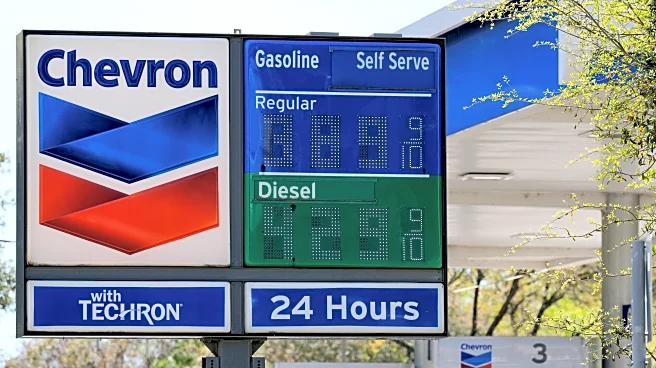
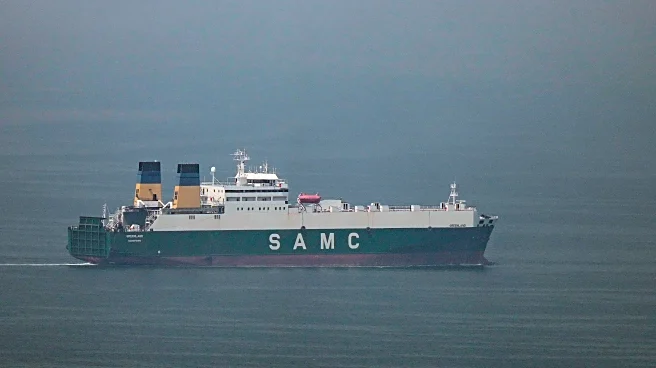
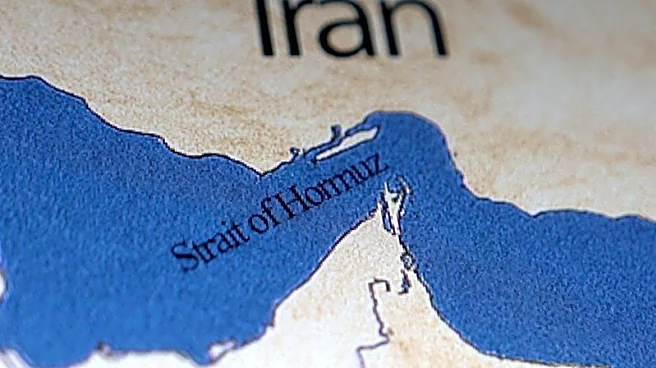
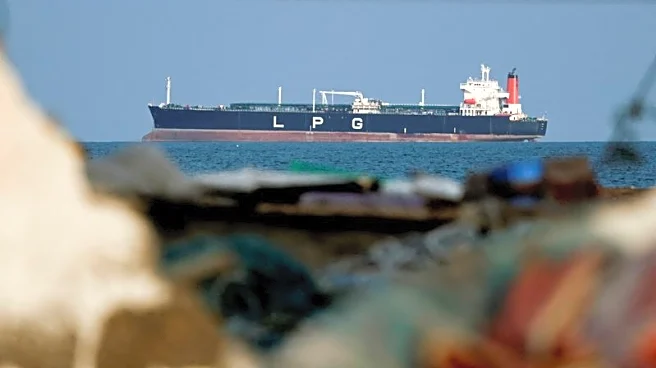
In response to rising tensions in the Middle East, the U.S. has allowed Iranian oil tankers to pass through the Strait of Hormuz, easing concerns over global oil supply. This development has led to a decrease in oil prices, with WTI crude futures settling
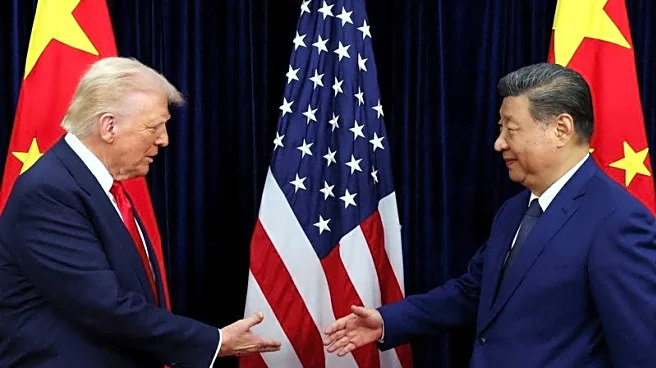
at $93.5 per barrel and Brent crude futures at $100.21 per barrel. President Trump has called on allies to join a coalition to ensure the security of oil shipments through the strait. However, there are differing interests among U.S. allies, complicating the formation of a unified response.
Why It's Important?
The decision to allow Iranian oil passage is a strategic move to stabilize global oil markets and prevent further economic disruption. The Strait of Hormuz is a critical chokepoint for global oil supply, and any prolonged disruption could have severe economic consequences. The U.S. aims to balance its geopolitical interests with the need to maintain stable energy markets. The situation highlights the interconnectedness of global economies and the importance of diplomatic efforts in resolving international conflicts.
What's Next?
The U.S. is expected to continue diplomatic efforts to form a coalition to secure the Strait of Hormuz. The White House is set to announce which countries will participate in the coalition. The outcome of these efforts will be crucial in determining the stability of global oil markets. Additionally, the situation may prompt a reevaluation of energy policies and strategies to reduce dependency on Middle Eastern oil.