

What's Happening?
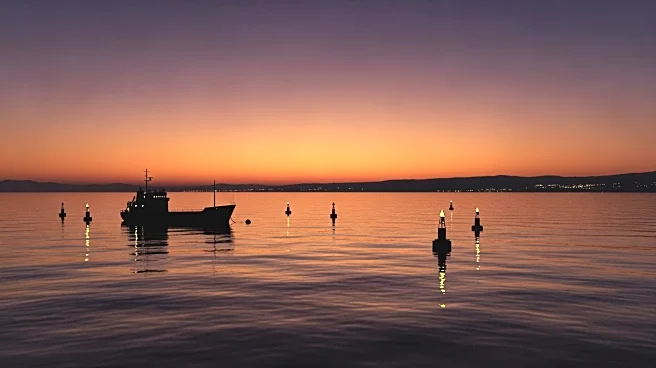
The Kingdom of Bahrain has announced the imposition of a nightly maritime curfew in response to increased Iranian aggression. This decision, effective immediately, restricts all maritime activities from 1800 to 0400 hours. The curfew applies to all vessels,
including fishing and leisure boats, and aims to ensure the safety of seafarers and prevent legal liabilities. Bahrain, strategically located between Qatar and Saudi Arabia, hosts a U.S. naval base and serves as a command center for joint military forces in the region. The curfew follows a series of Iranian attacks, including those on Aluminium Bahrain and Emirates Global Aluminium, resulting in injuries and significant damage. Bahrain's air defenses have intercepted numerous ballistic missiles and drones, highlighting the escalating tensions in the region.
Why It's Important?
The maritime curfew in Bahrain underscores the heightened security concerns in the Persian Gulf, a critical region for global oil supply and military strategy. The curfew could disrupt maritime trade and affect the operations of international shipping companies. The U.S. military presence in Bahrain, including a naval base, signifies the strategic importance of the region in countering Iranian influence. The increased Iranian attacks pose a threat to regional stability and could lead to further military engagements. The situation also impacts the global economy, as disruptions in the Gulf could affect oil prices and supply chains. The curfew reflects Bahrain's efforts to protect its maritime borders and maintain regional security amid growing tensions.
What's Next?
The continuation of the maritime curfew will depend on the evolving security situation in the region. Bahrain may seek further international support to bolster its defenses against Iranian aggression. The U.S. and its allies could increase military presence or conduct joint exercises to deter further attacks. Diplomatic efforts may be intensified to de-escalate tensions and prevent a broader conflict. The impact on maritime trade and regional economies will be closely monitored, with potential adjustments to shipping routes and security protocols. The international community will likely call for restraint and dialogue to address the underlying issues contributing to the conflict.
Beyond the Headlines
The imposition of a maritime curfew in Bahrain highlights the complex geopolitical dynamics in the Persian Gulf. The region's strategic importance for global energy supplies and military operations makes it a focal point for international diplomacy and security strategies. The curfew may prompt discussions on maritime security and the need for enhanced cooperation among Gulf states. It also raises questions about the effectiveness of current defense systems and the potential for technological advancements in missile and drone interception. The situation underscores the delicate balance of power in the region and the challenges of maintaining peace and stability amid ongoing conflicts.