





What's Happening?
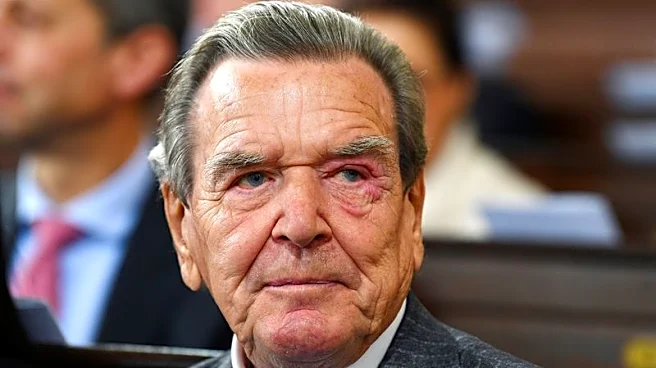
The European Union has rejected a proposal by Russian President Vladimir Putin to appoint former German Chancellor Gerhard Schröder as a mediator in peace talks aimed at resolving the ongoing conflict in Ukraine. Schröder, known for his close ties to Moscow
and previous roles in Russian energy projects, was suggested by Putin as a potential figure to restart negotiations with Europe. However, EU leaders, including top diplomat Kaja Kallas, have dismissed the idea, citing Schröder's lack of impartiality due to his history as a lobbyist for Russian state-owned companies. The EU's stance reflects a broader reluctance to allow Russia to influence the selection of negotiators in the peace process, especially given the ongoing military stalemate and heavy casualties on both sides.
Why It's Important?
The EU's rejection of Schröder as a mediator underscores the bloc's determination to maintain its autonomy in the peace process and avoid being sidelined in negotiations that could shape the future of Ukraine. This decision highlights the EU's commitment to ensuring that any peace talks include Ukraine's involvement and reflect its interests. The move also signals the EU's wariness of Russian influence and its efforts to prevent Moscow from dictating terms that could undermine European security and stability. The ongoing conflict has significant implications for regional security, energy supplies, and the geopolitical balance in Europe, making the EU's role in peace negotiations crucial.
What's Next?
As the US-brokered ceasefire is set to expire, the EU is likely to continue its efforts to secure a seat at the table in future peace negotiations. The bloc may seek to strengthen its diplomatic ties with Ukraine and other international partners to bolster its position. Meanwhile, the military situation on the ground remains tense, with both Russian and Ukrainian forces showing signs of exhaustion. The EU's rejection of Schröder could lead to further diplomatic maneuvers by Russia to influence the peace process, while the EU may explore alternative diplomatic channels to facilitate negotiations.