






What's Happening?
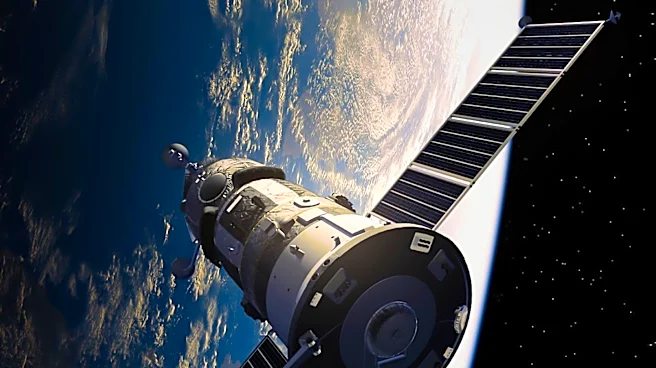
Researchers from the University of Warwick have discovered a significant amount of space debris in the geostationary orbit, a region 22,000 miles above Earth where many expensive satellites operate. This orbit is unique because satellites here move in sync
with Earth's rotation, providing a constant view of the same area on the planet. The study, using data from the Isaac Newton Telescope, identified 25 previously undetected debris tracks, 80% of which were from unknown objects. The debris poses a threat as it can cause significant damage to satellites due to high-speed collisions. The lack of atmospheric drag at this altitude means the debris will not naturally deorbit and burn up, making it a persistent hazard.
Why It's Important?
The discovery of space debris in geostationary orbit is crucial as it threatens the safety and functionality of satellites that provide essential services like TV broadcasting, internet, and weather monitoring. These satellites are often large and costly, and even small debris can cause substantial damage. The persistence of debris in this orbit could lead to increased operational risks and costs for satellite operators. This situation underscores the need for improved debris detection and mitigation strategies to protect valuable space assets and ensure the continued reliability of satellite services.
What's Next?
Researchers plan to analyze additional images from other telescopes to better understand the extent of debris in geostationary orbit. This could lead to the development of more effective debris monitoring and mitigation techniques. Satellite operators may need to invest in enhanced shielding or maneuvering capabilities to protect their assets. The findings could also prompt international discussions on space debris management and the implementation of stricter regulations to prevent further contamination of this critical orbital region.