






What's Happening?
The U.S. Department of Energy (DOE) announced significant investments to enhance electric grid reliability, including a specific project in Indiana. This initiative is projected to save Hoosiers millions of dollars annually. The DOE is allocating $1.9
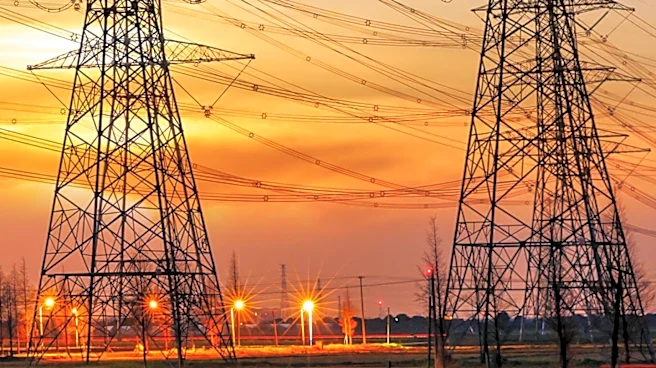
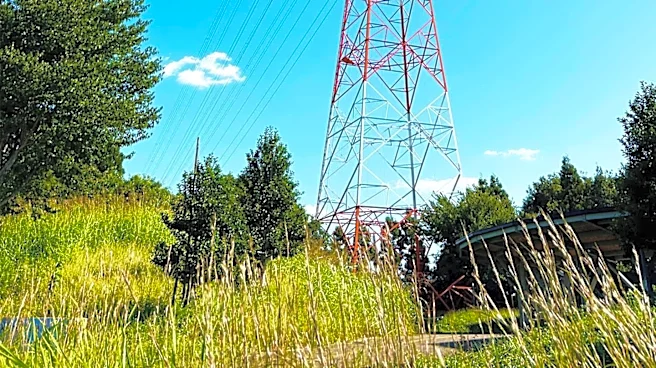
billion and launching a $3.35 billion cost-share program to support 31 projects across 26 states. One key project focuses on improving the connection, or 'seam,' between Indiana's two regional grid operators: Midcontinent Independent System Operator (MISO) and PJM Interconnection. The DOE is investing $175 million in the Indiana project, with an additional $350 million contributed by private partners. This project aims to reduce congestion costs and is expected to generate annual benefits ranging from $50 million to $150 million for ratepayers. The nationwide effort, named SPARK (Speed to Power through Accelerated Reconductoring and other Key Advanced Transmission Technology Upgrades), will involve rebuilding over 1,500 miles of transmission lines and deploying grid-enhancing technology across an additional 21,000 miles. These upgrades include replacing older power lines with higher-capacity conductors and advanced transmission technology within existing rights-of-way.
Why It's Important?
This investment is crucial for improving the reliability and affordability of electricity for consumers in Indiana and across the U.S. By enhancing the interconnection between MISO and PJM, the project will allow power to move more efficiently and cost-effectively, directly addressing energy affordability concerns. The estimated annual savings of $50 million to $150 million for ratepayers highlight the significant economic impact, although the exact effect on individual monthly bills is yet to be determined. Grid congestion, which often forces utilities to purchase electricity from other states at higher prices, will be mitigated, potentially leading to lower customer costs. Furthermore, the broader SPARK initiative, which involves modernizing thousands of miles of transmission lines, is vital for meeting increasing electricity demand and ensuring a stable power supply. This modernization effort is particularly important as the energy industry faces challenges from surging demand, partly driven by the proliferation of AI data centers. The project also demonstrates a collaborative approach between federal agencies and private partners to address critical infrastructure needs.
What's Next?
The Indiana power line project is expected to take four years to complete. Upon completion, it will unlock thousands of megawatts of capacity, allowing for more efficient and cost-effective power transfer between the MISO and PJM grids. While federal and state officials are optimistic about the benefits, an Indiana consumer advocacy group, Citizens Action Coalition (CAC), is awaiting more detailed information on the project's specifics and the methodology behind the projected savings. CAC Executive Director Kerwin Olson emphasized the need for transparency regarding the numbers and assumptions to ensure that the benefits genuinely reach ratepayers. The nationwide SPARK initiative will continue to roll out, with 31 projects across 26 states receiving funding. These projects will focus on rebuilding and modernizing transmission lines, deploying advanced technologies, and increasing national grid capacity. The success of these projects will likely influence future federal and state investments in grid infrastructure and energy policy, particularly concerning energy affordability and reliability.
Beyond the Headlines
Beyond the immediate economic benefits, this initiative underscores a broader strategic shift towards modernizing the U.S. electrical grid to meet evolving energy demands and challenges. The emphasis on utilizing existing rights-of-way for upgrades reflects a pragmatic approach to infrastructure development, minimizing new land acquisition and potential environmental impacts. The project also highlights the increasing importance of regional grid interconnections in ensuring energy security and resilience. As the nation grapples with the integration of renewable energy sources and the growing energy consumption of advanced technologies like AI, a robust and flexible grid becomes paramount. The involvement of private partners alongside federal funding signals a recognition that large-scale infrastructure improvements require diverse investment. However, the cautious stance of consumer advocacy groups like CAC points to the ongoing need for accountability and transparency in how these projects translate into tangible benefits for everyday citizens, ensuring that the promised savings are realized and equitably distributed.