






What's Happening?
Graham Platner, the presumptive Democratic U.S. Senate nominee for Maine, has reportedly reached an understanding with Senate Democratic Leader Chuck Schumer. This development comes after a contentious primary race where Schumer and the Democratic Senatorial
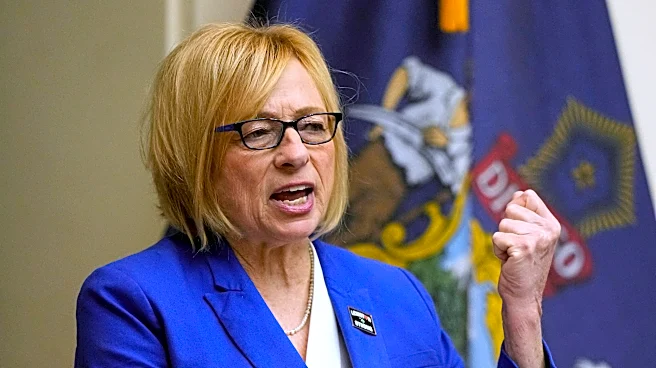
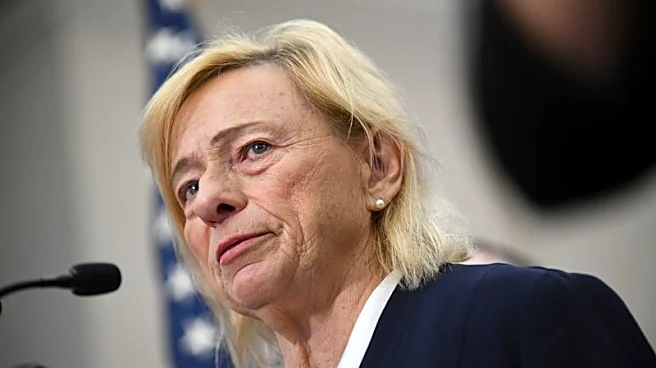
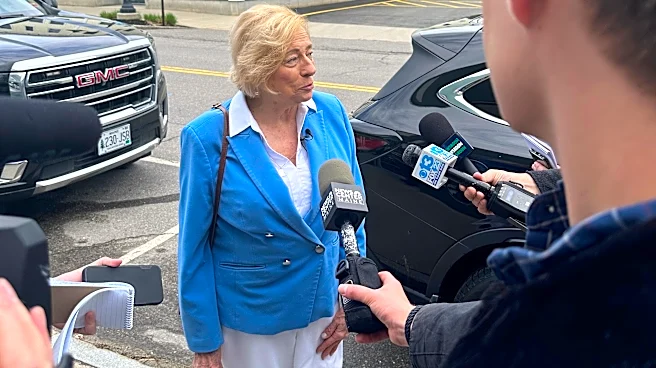
Campaign Committee (DSCC) initially endorsed Platner's opponent, Governor Janet Mills. Despite the initial rift, Platner has expressed a willingness to collaborate with the party establishment, albeit with certain conditions. The primary race saw Mills releasing an ad criticizing Platner for controversial online remarks, but Platner has since pulled ahead, leading to Mills' withdrawal from the race. Platner's campaign has been characterized by a focus on community organizing and economic populism, which he plans to continue despite any pressure from national Democratic leaders.
Why It's Important?
This development is significant as it highlights the internal dynamics within the Democratic Party as it seeks to regain control of the Senate. Platner's candidacy represents a shift towards grassroots organizing and economic populism, which could influence the party's strategy in key swing states. The reconciliation with Schumer and the DSCC suggests a potential alignment of resources and support, crucial for defeating the incumbent Republican Senator Susan Collins. Platner's approach may also signal a broader trend within the party towards embracing more progressive and populist policies, which could reshape its electoral strategy and policy priorities.
What's Next?
As the general election approaches, Platner will likely continue to emphasize his grassroots campaign strategy, aiming to build a broad coalition of support. The DSCC is expected to provide financial backing to counter the significant resources likely to be deployed by Collins and the Republican Party. Platner's ability to maintain his campaign's focus while integrating support from the Democratic establishment will be critical. The outcome of this race could have implications for the Democratic Party's approach in future elections, particularly in swing states where traditional strategies have been less effective.