

What's Happening?
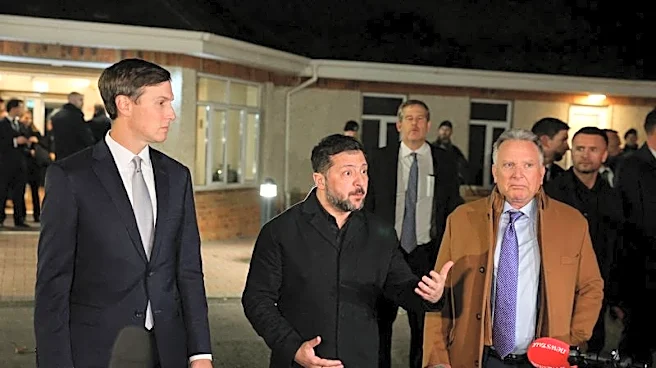
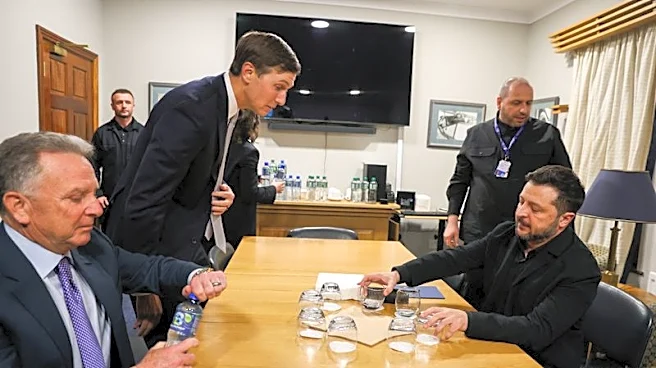
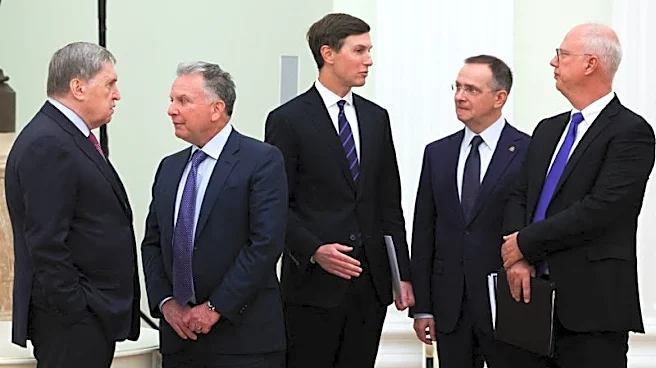
The United States is preparing for a new round of peace talks aimed at ending Russia’s war against Ukraine. Jared Kushner, an adviser to the U.S. President, announced on November 16, 2026, that he and Steve Witkoff discussed next steps with Russian Presidential
Aide Yuri Ushakov. Consultations have also been held with Ukraine and European partners. Key topics for these negotiations include security guarantees for Ukraine, Europe’s participation in the peace process, and post-war reconstruction efforts. Ukrainian President Volodymyr Zelenskyy confirmed that further online consultations would take place with Kushner, Witkoff, and European representatives. While the U.S. is pushing for broader European involvement, Russia has stated it has not agreed to expand the format of the talks to include European representatives. The exact date and final format of the upcoming meeting have not yet been determined, but discussions are actively underway to set the agenda.
Why It's Important?
These ongoing diplomatic efforts are crucial for potentially de-escalating the conflict in Ukraine and establishing a framework for lasting peace in Europe. The U.S. emphasis on security guarantees for Ukraine, a path to EU membership, and a comprehensive post-war prosperity plan highlights a long-term vision for Ukraine's stability and integration into the European security architecture. The involvement of European partners, including National Security Advisors from Germany, France, the United Kingdom, Poland, and Italy, along with representatives from the EU and NATO, signifies a concerted effort to address European security concerns comprehensively. However, Russia's reluctance to include European representatives in the next round of talks poses a significant challenge, indicating potential disagreements on the scope and participants of future negotiations. The outcome of these talks will directly impact the geopolitical landscape of Europe, influencing security alliances, economic stability, and the future of international relations.
What's Next?
The immediate next step involves agreeing on the agenda and format of the next multilateral meeting, particularly regarding the full participation of European partners. While the U.S. is working to convene this meeting in the near future, Russia's differing view on European involvement suggests that further diplomatic maneuvering will be required. Discussions will continue to focus on establishing robust and legally binding security guarantees for Ukraine, outlining a clear path for its EU membership, and developing a comprehensive post-war prosperity plan. Any final peace agreement will necessitate consent from both Russia and Ukraine, and significant challenges remain. The parties have agreed to meet in Berlin as part of a 'Coalition of the Willing' to work out concrete joint steps in the negotiation process, indicating a commitment to continue dialogue despite the difficulties.
Beyond the Headlines
The ongoing peace talks extend beyond immediate conflict resolution, aiming to redefine the European security architecture. The U.S. objective to build on Europe’s existing institutions and agreements, strengthening security commitments and mechanisms for de-escalation, suggests a long-term strategy to prevent future conflicts. The discussions also touch upon the ethical and legal dimensions of international security, particularly concerning the sovereignty and territorial integrity of nations. The emphasis on a comprehensive post-war prosperity plan, developed with international partners like the World Bank, underscores the recognition that lasting peace requires economic stability and reconstruction. The differing stances on European participation highlight the complex power dynamics and trust deficits that need to be overcome for any meaningful resolution, reflecting deeper geopolitical rivalries and the challenge of achieving consensus among diverse stakeholders.