



What's Happening?
The United States is considering a policy that could ban the use of DJI drones, which are widely used for agricultural purposes. This move is driven by national security concerns but could significantly impact the agricultural sector. In contrast, China
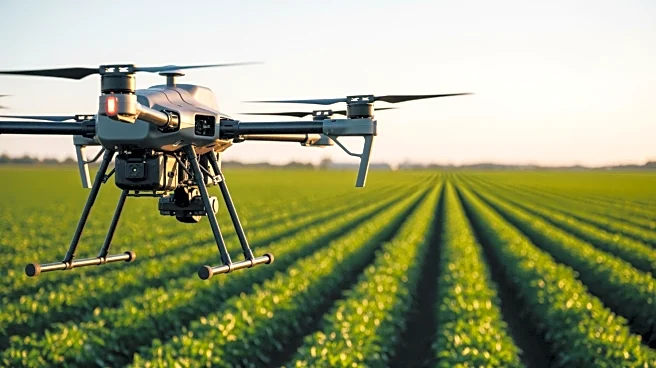
has embraced the use of agricultural drones, which has led to a reduction in diesel consumption and increased efficiency in crop management. Chinese farms, often small and fragmented, benefit from drones that can easily navigate difficult terrains, reducing the need for heavy machinery. This has resulted in significant fuel savings and reduced chemical use, contributing to lower greenhouse gas emissions. The U.S., however, relies heavily on large, diesel-powered machinery, and the potential ban on DJI drones could remove a cost-effective option for farmers, potentially increasing operational costs.
Why It's Important?
The potential ban on DJI drones in the U.S. could have significant implications for the agricultural sector. Drones offer a more efficient and environmentally friendly alternative to traditional farming methods, reducing diesel consumption and chemical use. By removing this option, U.S. farmers may face higher costs and reduced efficiency, which could impact the competitiveness of American agriculture. Additionally, the environmental benefits seen in China, such as reduced greenhouse gas emissions, may not be realized in the U.S. if drone usage is restricted. This decision could also affect the broader push towards more sustainable and efficient agricultural practices, which are increasingly important in the context of climate change and resource management.
What's Next?
If the U.S. proceeds with the ban on DJI drones, farmers may need to seek alternative technologies or revert to more traditional methods, potentially increasing costs and reducing efficiency. The agricultural sector may lobby against the ban, highlighting the economic and environmental benefits of drone technology. Additionally, domestic drone manufacturers could see an opportunity to fill the gap left by DJI, although they currently lack the scale and cost-effectiveness of the Chinese company. The decision will likely spark a broader debate on balancing national security concerns with the need for technological advancement in agriculture.
Beyond the Headlines
The divergence in drone policy between the U.S. and China highlights broader issues of technological adoption and national security. While China has leveraged drones to enhance agricultural productivity and sustainability, the U.S. faces a complex regulatory environment that may hinder similar advancements. This situation underscores the challenges of integrating new technologies into established industries, particularly when national security concerns are involved. The outcome of this policy decision could influence future approaches to technology regulation and its role in addressing environmental and economic challenges.