







What's Happening?
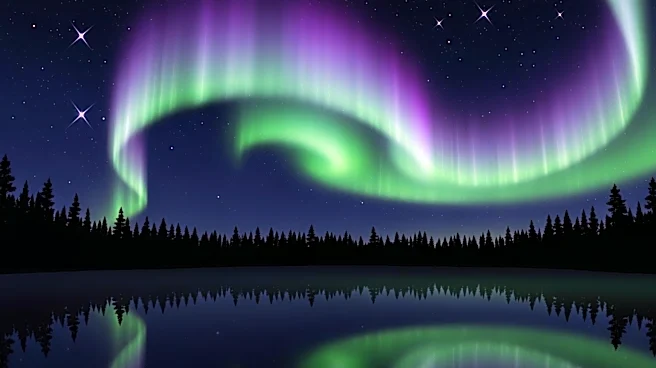
A significant geomagnetic event is expected to make the Northern Lights visible across 24 U.S. states, according to a forecast from the National Oceanic and Atmospheric Administration (NOAA). This rare opportunity is driven by heightened solar activity,
which has pushed the auroral zone further south than usual. The event is linked to a minor geomagnetic storm, classified as G1, which is capable of producing bright auroras under optimal conditions. The Kp index, a measure of geomagnetic activity, is forecast to peak at 4.67, indicating a strong likelihood of visible auroras. The states with the highest probability of visibility include Alaska, Washington, Idaho, Montana, North Dakota, and Minnesota. The aurora's southern visibility line extends to states such as Wyoming, South Dakota, Nebraska, Iowa, Wisconsin, Michigan, Illinois, Indiana, Ohio, Pennsylvania, New Jersey, New York, Connecticut, Rhode Island, Massachusetts, Vermont, New Hampshire, and Maine.
Why It's Important?
The potential visibility of the Northern Lights across such a wide swath of the United States is a rare event, offering millions of Americans the chance to witness one of nature's most spectacular displays. This occurrence highlights the impact of solar activity on Earth's magnetic field and the resulting atmospheric phenomena. For many, this event provides a unique opportunity to engage with natural science and astronomy, potentially sparking interest in these fields. Additionally, the widespread visibility could boost local tourism in areas where the aurora is expected to be visible, as people travel to optimal viewing locations. The event also underscores the importance of monitoring solar activity and its effects on Earth, which can have broader implications for satellite operations and communication systems.
What's Next?
Observers are advised to seek locations with clear skies and minimal artificial light to maximize their chances of seeing the aurora. The best viewing window is expected between 10 p.m. and 2 a.m. local time. Those interested in witnessing the event should consider traveling to rural or elevated areas to avoid light pollution. As the geomagnetic storm progresses, NOAA will continue to monitor solar activity and provide updates on the aurora's visibility. This event may prompt further research into the effects of solar flares and geomagnetic storms on Earth's atmosphere and technology.