





What's Happening?
A new study published in the journal Science indicates that El Niño events are becoming significantly stronger due to human-caused climate change. Researchers, led by Julia Cole, a paleoclimate scientist at the University of Michigan, found that El Niños
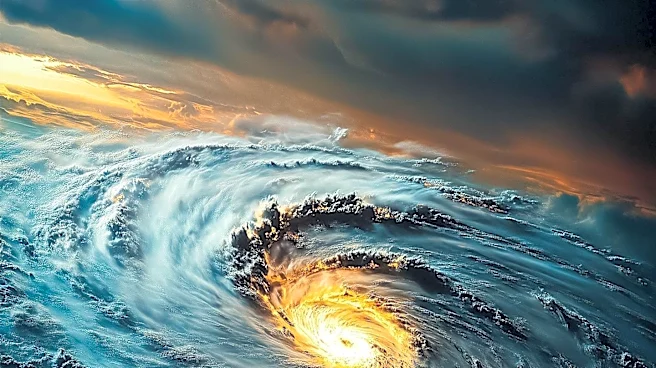
are more than 36% stronger than they were before the industrial age began in the mid-1800s. This intensification has seen a 16% jump in strength in just the last 40 years, suggesting an accelerating trend. The study utilized coral fossils from the Galápagos Islands, some dating back 900 years, to reconstruct historical sea surface temperatures and El Niño patterns. This paleoclimate data provides a longer historical context than traditional observational records, which only span about 75 years. The findings align with the current strong El Niño event, which is forecast to be among the biggest on record, causing widespread disruptions globally. El Niño, a natural climate phenomenon involving the warming of the tropical Pacific Ocean, influences weather patterns worldwide, leading to extreme events such as heat waves, floods, and droughts.
Why It's Important?
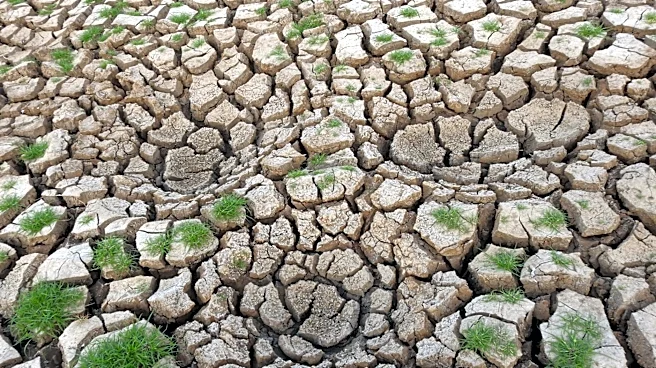
The intensification of El Niño events has profound implications for global climate stability and human societies. Stronger El Niños are linked to more severe climate extremes, amplifying ecological, infrastructural, and human losses. These events can cause significant economic damage, with past strong El Niños in 1982-83, 1997-98, and 2015-16 estimated to have resulted in trillions of dollars in losses. The study highlights that no country is fully protected from these impacts, underscoring the urgent need for global mitigation efforts. The findings challenge previous scientific debates about whether El Niño's magnitude is changing due to human-caused warming, providing compelling evidence that it is. This increased strength means more frequent and intense droughts, floods, wildfires, and food insecurity, impacting agriculture, human health, and overall societal resilience. The research also suggests that El Niño events contribute to a step-change in global average temperatures, which remain elevated even after the event subsides, indicating an acceleration of global warming.
What's Next?
The findings underscore the critical need for intensified efforts to mitigate global warming by reducing fossil fuel emissions. Scientists emphasize that while El Niño is a natural phenomenon, its 'supercharging' by climate change means its impacts will continue to worsen without significant intervention. The ongoing analysis of corals from recent El Niño events (2015-16 and 2023-24) by Cole's team will further refine understanding of this accelerating trend. Policymakers and international bodies will likely face increased pressure to implement more aggressive climate policies and disaster preparedness strategies. Communities worldwide, particularly those vulnerable to extreme weather, will need to adapt to more frequent and intense climate hazards. The study's implications could also influence future climate modeling and predictions, leading to more accurate forecasts of extreme weather events and their potential impacts.
Beyond the Headlines
This study delves into the complex interplay between natural climate cycles and anthropogenic climate change, revealing how human activities are fundamentally altering Earth's climate systems. The use of coral fossils as 'time machines' to reconstruct past climate data offers a powerful methodology for understanding long-term climate trends that extend beyond modern observational records. The debate among scientists regarding the study's findings highlights the ongoing scientific process of refining understanding in complex fields like climate science. While some scientists acknowledge the importance of the coral data, others point to potential discrepancies with recent observations, emphasizing the need for continued research and diverse data sources. Ultimately, the research reinforces the ethical imperative to address climate change, as the 'angry beast' of the climate system is being poked with the 'stick' of human emissions, leading to more violent and threatening 'outbursts' like intensified El Niños.