





What's Happening?
Cellares, an Integrated Development and Manufacturing Organization (IDMO), and Seoul National University Hospital (SNUH) have announced a partnership to evaluate the automated manufacturing of a gene-modified hematopoietic stem and progenitor cell (HSPC)
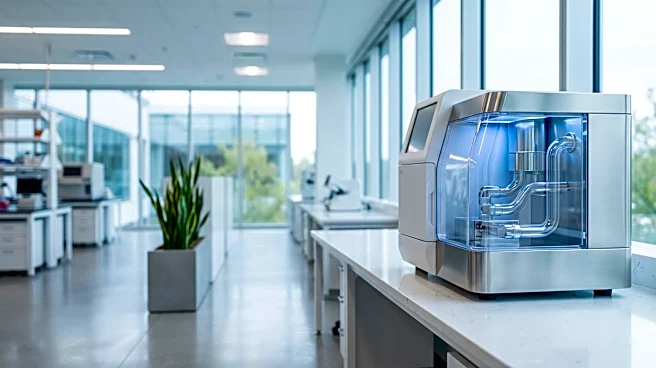
therapy. This collaboration aims to target paroxysmal nocturnal hemoglobinuria (PNH) using Cellares’ Cell Shuttle platform. The proof-of-concept study will focus on translating SNUH’s existing gene-modified HSPC manufacturing process onto the Cell Shuttle, specifically incorporating a two-step transfection workflow through Cellares’ fully integrated and single-use electroporation module. This marks Cellares’ second collaboration in Asia and is intended to support SNUH’s program towards future clinical development in the United States. The partnership seeks to address the challenges of gene-modified HSC manufacturing, which is currently labor-intensive, variable, and difficult to scale, thereby limiting clinical development, increasing costs, and restricting patient access.
Why It's Important?
Gene-modified HSPC therapies hold immense promise for treating various severe diseases, including genetic disorders and certain cancers. However, their widespread adoption and accessibility are significantly hampered by complex, costly, and inconsistent manufacturing processes. This partnership is crucial because it aims to automate these intricate workflows using Cellares' Cell Shuttle platform, which has received the FDA’s Advanced Manufacturing Technology (AMT) designation. Automation can dramatically improve the scalability, reliability, and cost-effectiveness of manufacturing gene-modified HSPC therapies. By streamlining the production process, this collaboration could accelerate the clinical development of SNUH’s PNH program in the U.S., potentially bringing a life-saving treatment to patients faster. Furthermore, successful automation could lead to broader patient access by reducing manufacturing costs and increasing the availability of these advanced therapies, thereby impacting public health and the economic viability of cell therapy development.
What's Next?
The immediate next step is the proof-of-concept evaluation, where Cellares and SNUH will assess the feasibility and effectiveness of automating SNUH’s gene-modified HSPC manufacturing process on the Cell Shuttle. This will involve rigorous testing of the two-step transfection workflow and overall process translation. If the proof-of-concept is successful, the collaboration will support SNUH’s preclinical development and IND-enabling manufacturing workflows for its PNH program, with the ultimate goal of establishing a scalable manufacturing strategy for future U.S. clinical trials. Cellares' ongoing engagement with the FDA through its AMT designation and participation in the Manufacturing PreCheck cohort suggests a streamlined regulatory pathway for therapies developed on its platform. The success of this partnership could also encourage other institutions and companies to adopt automated manufacturing solutions for cell and gene therapies, further accelerating innovation and accessibility in the field.
Beyond the Headlines
This collaboration highlights a significant trend in the biopharmaceutical industry: the move towards industrializing advanced therapies through automation and integrated manufacturing solutions. While cell and gene therapies offer revolutionary potential, their complex production has been a major bottleneck. The Cell Shuttle platform represents a broader shift towards Industry 4.0 principles in biotech, aiming to achieve the capacity, reliability, and economics required to meet global patient demand for these 'living drugs.' The partnership also underscores the increasing international collaboration in cutting-edge medical research and development, with South Korean institutions leveraging U.S.-based advanced manufacturing technologies for global clinical impact. Ethically, making these therapies more accessible and affordable through automation addresses critical equity concerns, ensuring that groundbreaking treatments are not limited to a select few but can benefit a wider patient population. This also sets a precedent for how future complex biological therapies will be developed, manufactured, and delivered worldwide.