



What's Happening?
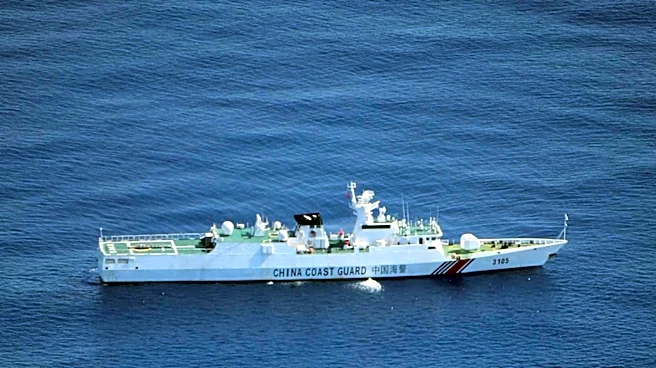
China is expanding its maritime presence east of Taiwan, conducting what the Asia Maritime Transparency Initiative (AMTI) describes as "unprecedented" operations. These activities, which include sustained "law-enforcement" patrols, surveys near Taiwan, and the questioning
of nearly 200 commercial vessels, follow a May agreement between Japan and the Philippines to negotiate a maritime boundary. AMTI suggests that these actions are not merely signals to Tokyo and Manila but an attempt by Beijing to alter the "status quo" by establishing a semipermanent presence and asserting authority in the Philippine Sea. This marks an escalation in tensions and employs "gray zone" tactics similar to those seen in Beijing's South China Sea disputes, raising concerns that China is testing strategies for a future quarantine or blockade of Taiwan.
Why It's Important?
China's expanded maritime presence east of Taiwan and its use of "gray zone" tactics have significant implications for U.S. national security and regional stability in the Indo-Pacific. The U.S. has a strong interest in maintaining peace and stability in the Taiwan Strait and upholding freedom of navigation. Beijing's actions, if successful in establishing a semipermanent presence, could challenge the existing international order and complicate U.S. and allied naval operations in the region. This development could also impact U.S. economic interests, particularly given the critical role of the Taiwan Strait in global shipping and the semiconductor industry. Furthermore, the increased tensions between China, Japan, and the Philippines, all key U.S. allies, could necessitate a stronger U.S. military presence and more robust diplomatic engagement to deter further escalation and reassure partners in the region, potentially leading to increased defense spending and strategic realignments.
What's Next?
The Asia Maritime Transparency Initiative (AMTI) report suggests that China's expanded maritime activities east of Taiwan are likely to continue, potentially leading to a normalization of its presence in these waters. This could prompt further reactions from Japan and the Philippines, who have already taken more assertive positions and deepened military ties. The U.S. is expected to closely monitor these developments and may increase its own freedom of navigation operations or joint exercises with allies in the region to counter China's assertions. Diplomatic efforts will likely intensify, with the U.S. and its partners urging de-escalation and adherence to international law. Taiwan will also likely remain vigilant, potentially enhancing its defensive capabilities and seeking stronger international support. The situation could lead to a prolonged period of heightened tensions and strategic maneuvering in the Philippine Sea, with implications for regional security architecture.
Beyond the Headlines
The ongoing maritime maneuvers by China east of Taiwan delve into complex legal and ethical dimensions concerning international waters, sovereignty, and the right to self-determination. Beijing's assertion of "broad and unprecedented jurisdiction" over what it calls its "near seas" challenges established principles of maritime law and could set a dangerous precedent for other territorial disputes globally. The use of "gray zone" tactics, which fall below the threshold of armed conflict, creates ambiguity and makes it difficult for international actors to respond effectively without risking escalation. This situation also highlights the broader geopolitical struggle for influence in the Indo-Pacific, where economic power, military might, and diplomatic leverage are all at play. The long-term implications could include a redefinition of maritime boundaries, increased militarization of the region, and a potential shift in global trade routes, all of which carry significant ethical considerations regarding peace, stability, and the rights of smaller nations.